
Why Great Packaging Starts with Research with Bea Saludo Francisco of Opus Hours
LISTEN ON: APPLE | SPOTIFY
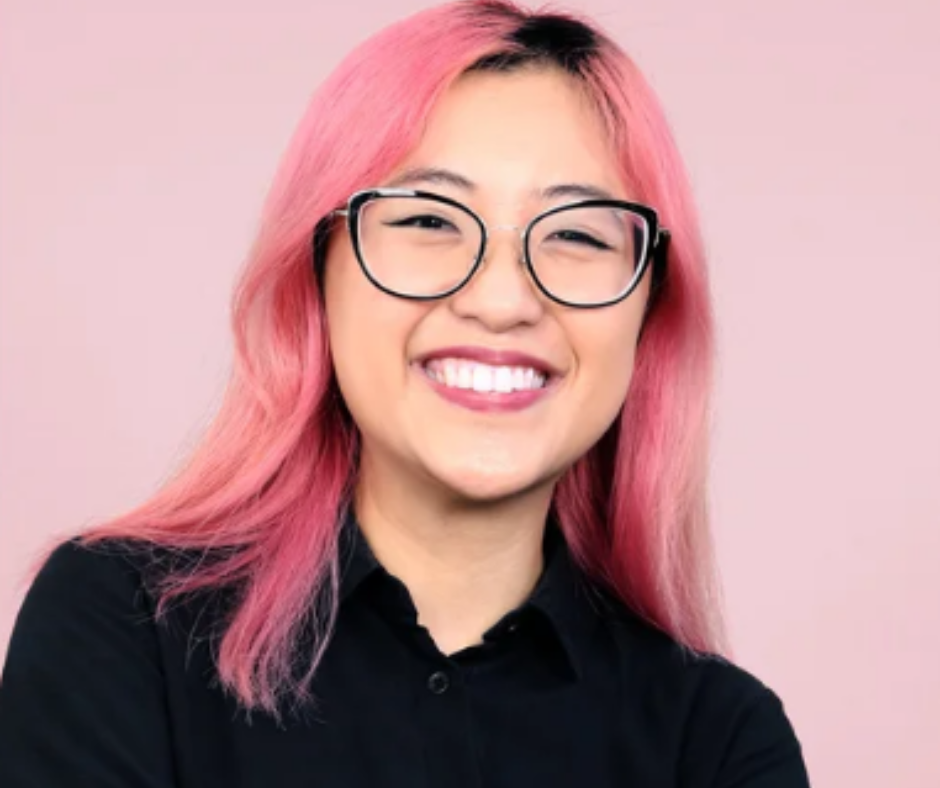
Bea Saludo Francisco took the Food Business Bootcamp® in 2018 on a small dream. She was working at Unilever in beauty and personal care, quietly flirting with the idea of becoming a food entrepreneur. The class didn't turn her into a food founder, but it did something equally important. It made her fall in love with the category and realize she wanted to help the people who were brave enough to build in it.
She went on to work agency side on some of the most recognizable names in CPG, including Pringles and Cheez-Its, before founding Opus Hours, a strategic creative agency built for purpose-driven consumer packaging brands. She also teaches packaging and communication design at the Fashion Institute of Technology. And she came back to Hudson Kitchen as the creative partner leading brand development for our Food Business Bootcamp® cohort.
In eight weeks, Bea and her team guided a cohort of early-stage founders through the full brand development process — from research and creative briefs to mood boards, logo sketches, digital renderings, and packaging design. The reveal on the last day of the cohort? Every brand looked completely different. Because that's exactly the point.
Subscribe to the Food Means Business Podcast with Hudson Kitchen founder Djenaba Johnson-Jones to hear the personal stories and "secret ingredients" of abandoning your day job and starting a CPG food business.
Tune in to hear...
Why Bea went from Bootcamp student to the creative lead behind our cohort's brand development
How she built Opus Hours after working on Pringles, Cheez-Its, and Unilever's beauty brands
Why design is a sales tool and what that means for early-stage founders
The step-by-step brand process she uses with founders: creative briefs, mood boards, sketches, digital renderings, and flavor rollout
Why skipping the research phase is the fastest way to waste time and money
Her advice: get clear on who you're creating for before you design a single thing
To get more Food Business Bites right in your inbox, sign up for our newsletter at thehudsonkitchen.com.
About Bea Saludo Francisco
Bea Saludo Francisco is the founder of Opus Hours, a strategic creative agency built for purpose-driven consumer packaging brands. With a background spanning Unilever, Pringles, and Cheez-Its, Bea brings big-brand rigor to early-stage founders. She teaches packaging and communication design at the Fashion Institute of Technology and serves as the brand development partner for the Hudson Kitchen Food Business Bootcamp®.
Connect with Bea and Opus Hours:
Visit the Opus Hours website
Follow Opus Hours on Instagram
Connect with Bea on LinkedIn
Stay Connected with Djenaba Johnson-Jones:
Visit Hudson Kitchen
Follow Hudson Kitchen on Instagram
Connect with Djenaba on LinkedIn
-
Djenaba Johnson-Jones (00:02.009)
Hi, I'm Djenaba Johnson-Jones, founder of Hudson Kitchen and host of the Food Means Business podcast. I'm joined today by Bea Saludo Francisco, who is the co-founder. I'm sorry, I'll start over. You're not the co-founder. I'll stop that. Hold on one second. Okay. Hi, my name is Djenaba Johnson-Jones. I'm the founder of Hudson Kitchen and host of the Food Means Business podcast.
Today I am joined by Bea Saludo Francisco, who is the founder of Opus Hours, creative agency, and among other things, welcome Bea.
Bea Saludo Francisco (00:38.488)
Hi, thanks so much for having me here. I'm thrilled, like truly thrilled.
Djenaba Johnson-Jones (00:41.725)
Absolutely. So I'll start with how we met. So you actually took our food business food camp course I think back in 2018 with your family.
Bea Saludo Francisco (00:55.362)
Yeah, so I took the food business bootcamp in 2018. was early stage in my career. I was working at Unilever, working on beauty and personal care. But I was flirting with the idea of maybe I can be a food entrepreneur. And so just out of a small little dream decided, let's just take this class. Whatever comes out of it, we'll get something out of it. So took the class.
Djenaba Johnson-Jones (01:12.472)
you
Bea Saludo Francisco (01:24.798)
And I realized that I just love food and beverage as an industry, and I would love to be in it somehow. The path didn't lead to me being my own food and beverage entrepreneur per se, but it helped me fall in love with the category and realize that I wanted to help design and use sort of the stuff that I love to do and help other people who are starting their own.
entrepreneurial journeys.
Djenaba Johnson-Jones (01:55.417)
Absolutely. So give us a little bit more about your background, what companies you've worked for and what you're doing now.
Bea Saludo Francisco (02:03.202)
Yeah, so my background is in brand strategy and packaging design. I launched my creative career at Unilever working on beauty and personal care brands. then I went after two years there, I went agency side and got to work on some recognizable brands like Pringles and Cheez-Its before starting my own studio. And so having worked on these larger brands, I take some of those insights and learnings and use those learnings to share them with
up and coming founders. And so I started Opus Hours. It's a strategic driven creative agency built for purpose driven consumer packaging brands. We support every stage of packaging and brand development, everything from research and strategy to concept development through production and launch from the creative side. And we also offer continued creative support as a brand grows. And alongside
The studio I love to teach. currently teach packaging and communication design at the Fashion Institute of Technology in New York City. Contrary to the name, we don't cover just fashion. But yeah, so we cover a wide range of industries, including food, beverage, alcohol, beauty, personal care, pets, wellness, cannabis, anything that you can put in a packaged consumer good. We handle branding and strategy for that.
Djenaba Johnson-Jones (03:02.627)
Yeah.
Bea Saludo Francisco (03:30.094)
I also, outside of FIT, work alongside early stage founders through the Hudson Kitchen Food Business Bootcamp. Thanks so much, Djenaba, for having me. And in that program, my team and I help founders build out their brand foundations, translating research and strategy into tangible deliverables like logos and packaging with the ultimate goal of wowing potential investors, retail buyers, and their future customers.
Djenaba Johnson-Jones (03:59.994)
Yes, and we just finished eight weeks with the cohort, which was amazing. So thank you so much for working with them. It was a pleasure to work with your team. I would tell you, I think I told you before, I was so blown away with your process that you go through to get to this end result for the cohort members. So I'd love you to just talk a little bit about how your team approaches developing a brand, essentially.
Bea Saludo Francisco (04:27.0)
Yeah, developing a brand. it's to kind of summarize the process. It's tough because it's a lot of work, right? And there's different phases that you have to go through. sometimes people want to just hop straight into design. But then if you really want value out of the work, we have created this process that really forces people to
Djenaba Johnson-Jones (04:35.662)
Yeah.
Bea Saludo Francisco (04:56.246)
get clarity first so that when we do approach visuals, we do so with intention. And so our process is rooted with starting with research first. So really getting to understand the market, understand competitors, get an understanding of their target audience, and letting those sort of insights lead our approach, our strategy, and having that strategy lead design. So for us, design is
not just decoration, it's a tool, it's a sales tool. It's your wingman for when you're not there to describe to people what you stand for as a brand. And so our process, we take these very calculated steps where we kind of validate the reason to be before we even hop into visuals.
And then we do a lot of iteration and we do a lot of testing and we make sure that all of this is considered before kind of finalizing a brand.
Djenaba Johnson-Jones (06:03.257)
Yeah, so with our group, you started with the creative brief and at our very first meeting with the cohort, I kind of took them through like, this is what a creative brief is and here's kind of what you're asking them to create. So they had to do their, you know, kind of put their own work in with your guidance before the team would even start anything. So talk a little about the creative brief process.
Bea Saludo Francisco (06:25.1)
Yeah, a creative brief, it is a written tool. It helps you align, like get everybody aligned on a brand strategy and execution, like the goals. Think about it this way, teams sometimes work on a project and we want to make sure everybody, every single person who's touching your project has an understanding of what you're trying to achieve. Also, because it's a written tool, takes...
all of the fun ideas kind of swimming around in a founder's head and turns them into something concrete, something clear, something actionable for creatives to work towards. It answers all of any key questions that we might have, like who is this for, what's the positioning, what are we saying, how are we saying it, and more. And because you're forced to articulate that in a written format, it forces founders to be decisive, it forces them to be clear.
And alongside with that, it also helps keep us creatives accountable for targeting those goals. So just ensure it helps keep us all on the same page and aligned with those goals. And I've seen sometimes people when they try to skip this step, design becomes subjective. Like if there's no like agreed upon goals, if there's no agreed upon like who are we talking to, you kind of get stuck into these loops of, well, I don't like it and I don't know why.
instead of actually kind of forming that criteria that we're working against to evaluate how to make it work. So that's why we spent a lot of upfront time kind of ironing out all those details. We could have spent all eight weeks doing design, but the first four weeks was that upfront work to articulate all of that into a creative brief.
Djenaba Johnson-Jones (07:58.819)
Great.
Djenaba Johnson-Jones (08:14.38)
Yeah, that was definitely really important. One of the fun things that we did was when you came to work with the class and they kind of had to pitch their creative brief to you is that you brought in, I guess, a live competitive analysis. So they got to be able to try the competitive products that they think are where their competitors. We got to try them in the room and discuss them as a group, which was really nice.
Bea Saludo Francisco (08:40.322)
Yeah, that, okay. The other draw to kind of designing for food and beverage brands is you can say that you eat snacks as research. And it's not even a joke. I mean, it is a joke in a little bit, but like it is research because you are experiencing a brand like from, yes, the visuals and the packaging, but also like what, like the taste, is it different? Like what makes your product different? And so we try to get them to...
Djenaba Johnson-Jones (08:41.72)
You
Bea Saludo Francisco (09:09.646)
experience their competitors more than just, it's more than just price point, right? It's really experiencing the brands, touching the packaging, seeing the structures, seeing what types of messaging are they putting on the front of it. And yes, there was a couple of aha moments when we stopped looking at thumbnails on the screen and really held those competitive examples.
Djenaba Johnson-Jones (09:34.486)
Yeah, yeah, that was actually a lot of fun. So and then we actually met and did a whole weekend of meetings with each of the cohort members. Can you take us through that process as well?
Bea Saludo Francisco (09:39.084)
So fun. So much food.
Bea Saludo Francisco (09:51.394)
Yeah, so we did a bunch of strategy consultations with the founders. So this was kind of like a midpoint in us developing our creative briefs because creative briefs, can evolve over, you know, sort of time of having like multiple conversations, sleeping on it, multiple conversations, sleeping on it. And so this midpoint was really helpful for having these early conversations to define constraints. I'm a big believer that constraints actually what helps
makes design and creative stronger because it forces you to be very intentional and selective with what you're saying, right? Visuals are saying things as well. Maybe it's not words, but it's still communicating something. And so we look at things like brand story, the market, competitors, price point, goals, and then we let that information guide our design decisions. Part of those conversations is we also provide, like the founders are
responsible for research on their own as well, because they need to be familiar with the market that they're working towards. But we also work to provide them some of our own research as well. We use some reputable databases like Mintel and Statista to help kind of also guide some of their decisions and hone in their strategy a lot further.
Djenaba Johnson-Jones (11:10.284)
Yeah, was, it was just really, for me, like was just blown away with the level of research that your team did on behalf of the founders and after receiving the information from them. So kudos to you. So what was the next thing that we did with the founders?
Bea Saludo Francisco (11:27.278)
We did mood boards. So once we get a creative brief down and it's locked in and we have all the information we need, instead of jumping straight into Adobe Illustrator and designing, we want to make sure, again, where possible, we can align on things. So much like creative briefs, think about it as a visual brief. Mood boards is an alignment tool where we'll show some reference.
Djenaba Johnson-Jones (11:28.589)
Yeah.
Bea Saludo Francisco (11:51.584)
images of like color, typography, illustration style, if that was applicable to their project, photography styles. And it's important to note like with these mood boards, they're not just about picking pretty images. I mean, we are sourcing pretty images. I'm not gonna lie. But it is a tool that helps us define tone, texture, emotional direction, styles. It's much easier to save time this way because
Djenaba Johnson-Jones (12:06.06)
Yeah.
Bea Saludo Francisco (12:18.83)
We can spend many hours in design development, but getting some early reactions to stuff that's already out there helps us to get info on, like, give us guardrails. Like, see what is resonating, what's not resonating. An example I love to tell students is if you ask someone to describe a vibe that they want for a brand, they might have an idea in their head that's very different from what you're thinking, even if you're working off of the same words.
And so as an example, someone might say, I want modern looking packaging. But modern can mean different things to many different people. And so having these visual references early on for founders to react to can save a lot of time instead of, here's design option one, two, and three, and then the reaction as well. This wasn't what I thought about modern. So it is an alignment tool. yes, it took up another week to kind of
put that together, as alongside the creative brief, this upfront work really helps us stay intentional and for that reason save a lot of time too.
Djenaba Johnson-Jones (13:27.574)
Yeah, totally. So and then from the mood boards, I believe you gave each of them three and they got to chance to, they made a selection. And then from the mood boards, you were able to start sketches of what the packaging could look like.
Bea Saludo Francisco (13:36.333)
Yes.
Bea Saludo Francisco (13:41.762)
Yeah, so once we're all on same page, this is the mood board that we want to go along with. And then here's some guardrails of what maybe you'd like to stay away from. Based on those conversations, we can finally get started on sketching out logos and packaging. And so we like to sketch a lot, a lot of different directions. And then as a team internally, looking at a bunch of different directions, honing down to just our top three favorites.
We start kind of wide and then narrow in because we want to like exhaust a bunch of different ideas. I'm a big believer that your first idea isn't always the best idea. That might be the surface level expected idea. And so we really want to push our team internally to really think at like push the boundaries of like what ideas we want to come to life. And then from there be selective and say, OK, compared to
the brief compared to the mood board out of our like 20, let's say 20 sketches. Here are the three that we feel the most confident in pitching. And then from there, the founders get to look at those three different options and provide feedback and see which one that they wanna move forward with for the next stage.
Djenaba Johnson-Jones (14:48.248)
Mm-hmm.
Djenaba Johnson-Jones (14:58.7)
Yeah, that was good. And then once they made that selection, were actually able to actually start, I guess, designing for real is the best way I would put it. Yeah.
Bea Saludo Francisco (15:08.962)
Yeah.
Yeah, got to, so they picked a sketch and then we were able to do digital renderings. So going from like a pencil sketch to jumping into the digital realm where it almost feels like it's done, which is kind of also the challenge of like managing expectations because you see something and it's digitally rendered and you think, my God, this is it, this is the one, like this is final, but it is still, there's still room to refine, right?
Djenaba Johnson-Jones (15:35.544)
Yeah.
Bea Saludo Francisco (15:39.822)
Usually there's a lot of managing expectations there where even though it feels like it can be real, there's still some wiggle room to continue to refine based off of our conversations. And so after we send them our digital renderings, we talk again what's working, what's not working, which direction you want to move forward with out of the three options that we pitch. And then we go into flavor rollout.
Djenaba Johnson-Jones (15:59.641)
Mm-hmm.
Bea Saludo Francisco (16:06.252)
in the beginning stages, we're really focusing on their hero product. We're focusing on what they've been workshopping with Drexel Food Labs to create that recipe and scale it. But we also want to ensure that their packaging design and their branding, it can work as a system, that it is able to be extended and not just like a one-hit wonder is what I would like to call it.
Djenaba Johnson-Jones (16:31.489)
Yeah
Bea Saludo Francisco (16:33.294)
And so like as an example, like you could have, you can have one product with one flavor and then is it, what does it look like when it's another flavor? Maybe the colors change, maybe there's some copy that changes out. And so being able to take their chosen direction and showing them how it will live when we extend it is also very important for not only the founders, but then also for when they're pitching to these like investors or
retail buyers, like they want to be able to see like, how does this brand, how, how can you have this future with this brand?
Djenaba Johnson-Jones (17:10.968)
Right, right, yeah, very important. in the end, the thing that blew me away the most was the fact that all the brands looked very different. And sometimes...
I've worked with some designers where they have a style and things look a certain way no matter what it is. And the fact that you were able to find the folks on your team that really knew how to design to the personality of the brand and that of the founder, I thought was really, really spectacular.
Bea Saludo Francisco (17:44.002)
Yeah, I love that you brought it up because it is important for brand designers to be able to kind of flex between styles. If you're just like a one-hit wonder with styles, you're kind of pigeonholing yourself because different brands are gonna need different things. So for some of the brands, they use illustration, but not all brands are gonna, like that might not be the strategy for them depending on who they're talking to.
Or there's like another brand that might be speaking to a more premium audience. And so there's like a higher emphasis on typography and special finishes. And so it's important that all the designers on the team understand that level of flexibility and storytelling that we want to bring into our brands. And I think that was the other reason why I wanted to work on this project as like a larger team. I think originally the...
the first conversation we had was maybe, can you do this? And I thought to myself, I could, like, I mean, I'd love to. I wish there was like eight of me running around, but like, it is, you get more value if you work out of having a team that has like diverse perspectives. And so it's not like an echo chamber of like, this is the one and only solution. We can kind of like bounce off of each other or pair people based off of their strengths. Like we have some designers who,
have really strong illustration skills and they got to work on the brands that had illustration. And then we had some others that were like more specialized in like typography research. And so they got to be paired up with those brands. And so it's great to be able to work in that sort of collaborative way. And everyone wins because then everyone gets such a unique sort of solution that is on strategy and memorable.
Djenaba Johnson-Jones (19:34.615)
No, it was spectacular. And it was really fun for me because I'd seen everything kind of along the way because I sat in on most of the meetings. And then we were able to unveil it to the entire group on our last day of the cohort. They were all just blown away with each other's design because I forgot they hadn't seen it at all. So it was so good. Yes. Yeah.
Bea Saludo Francisco (19:38.734)
See you.
Bea Saludo Francisco (19:58.07)
Aww, such a like a little big reveal moment. It feels like, you know, like on reality TV and it's like, oop, pull back the curtain. Whoa.
Djenaba Johnson-Jones (20:05.368)
I almost wish I had recorded everybody's reaction to everyone else's design, so that was fun. Yeah, definitely have to do it next time. So yeah, we're definitely looking forward to working with you and your team again on the bootcamp. Do you have any, maybe a piece of advice to kind of leave folks with that may be considering working in the bootcamp or also just considering working with a designer?
Bea Saludo Francisco (20:10.283)
man, we have to do that next bootcamp.
Bea Saludo Francisco (20:27.352)
Mm-hmm.
Yeah, think one of the biggest things that I would love to share with any founder in general is understanding who are you creating for, Making a product and marketing it, understanding who's actually going to buy it, because a lot of times there's this desire to please everybody. But in reality,
You can't please everyone. Everyone has such different needs, motivations, problems. so if there was any advice I would give to founders is get some clarity on who you want to speak to. Another thing that I would love to leave with them is to trust the creative process and to not skip steps, to cut corners. A lot of the great
consumer packaged goods brands that are out there are successful because they really recognize the value and the return on investment of creative, branding, packaging, photos. I think one of the talks that was given, I didn't give this talk, but one of the boot campers told me about how they heard from another founder that came back.
Djenaba Johnson-Jones (21:47.704)
you
Bea Saludo Francisco (21:53.612)
They said that one of the best investments they made was photography. like creative is a tool to really accelerate your business. And so, like just understanding who you're creating for and to trust and invest in creative. Yeah.
Djenaba Johnson-Jones (22:09.292)
Yeah, thank you. So we have a tradition at Hudson Kitchen where we ring a bell when we're celebrating something. So I'm wondering, what are you celebrating?
Bea Saludo Francisco (22:18.41)
Right now, I'm celebrating with my team about the great work that we did on this past bootcamp. It was a really challenging but very, very fulfilling eight weeks. And so we're kind of taking this week to really celebrate. I think it's very important to celebrate those wins. Another thing that I want to celebrate is one of our clients just secured funding and also was approached by a retail buyer.
really happy for their wins. And just there's something so magical about working with people to make their dreams come true. And it's something that just existed as an idea just maybe eight weeks ago and kind of bringing it to reality. Like I am just so grateful to be part of that journey with.
Djenaba Johnson-Jones (23:10.008)
Thank you. So let everyone know where they can find out about you and Opus Hours.
Bea Saludo Francisco (23:16.226)
Yeah, so at the time of this recording, we haven't hard launched yet. We've soft launched before, but by the time that this podcast released, we will have our website and our social setup. So please find us at opushours.com and on Instagram, and hoping to launch also LinkedIn and TikTok. And we will plan to share our work and our insights into branding and packaging and some of the work that we've done on the bootcamp as well. So hope you can catch us there.
Djenaba Johnson-Jones (23:57.881)
Great, thank you. Okay, hold on just a moment. Yep, let's see.
Bea Saludo Francisco (24:01.08)
Thanks so much.