
Nobody Told You Building a Food Business Would Feel Like This with Regina L. Henry of RLH Global
LISTEN ON: APPLE | SPOTIFY
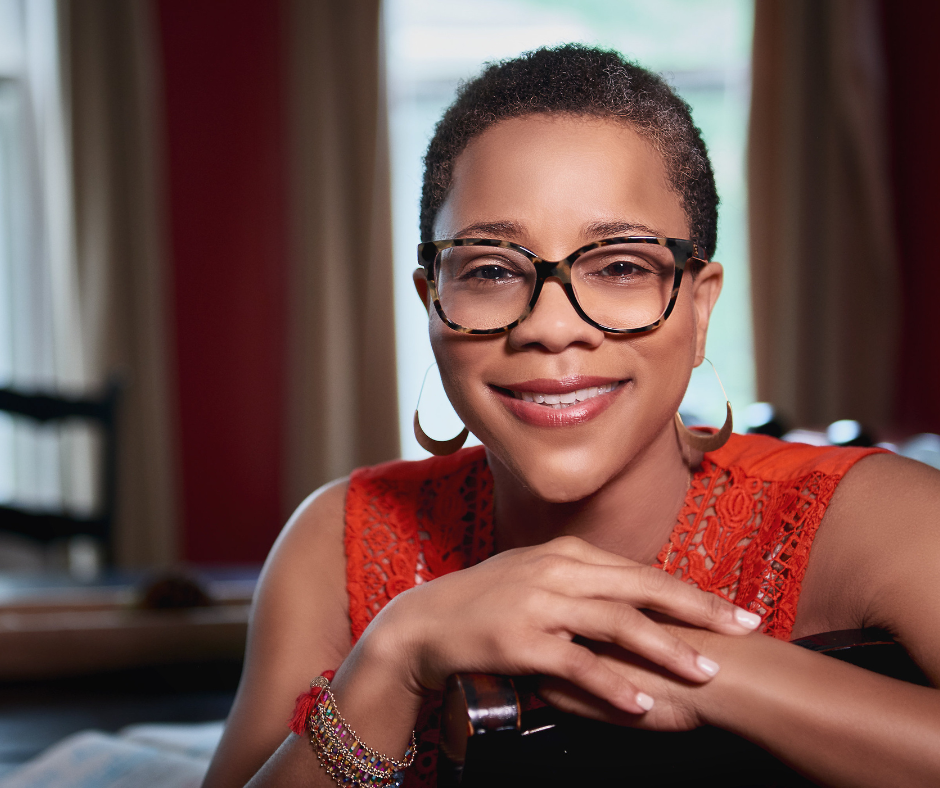
Nobody tells you how it's going to feel to be a founder. The doubt, the comparison, the exhaustion of being the visionary and the operations manager at the same time, those are the things Regina L. Henry, founder of RLH Global, has been helping Food Business Bootcamp founders navigate for eight years. In this episode, she and Djenaba get honest about what building a food business actually feels like and what it takes to keep going anyway.
Regina opens by naming the three mindset challenges she sees most consistently in early-stage founders, and if you have ever felt like you did not belong in the room, could not make a decision fast enough, or could not get out of your own way, at least one of them will sound familiar.
The conversation also goes deep on comparison. Social media makes it easy to measure your progress against someone else's highlight reel. Regina has a response to that, and it is not what you might expect.
Regina and Djenaba also get personal here. They are monthly breakfast companions and genuine business besties, and that dynamic makes this one of the more honest conversations in the podcast's run. Whether you are just starting out or in year five wondering why things are moving slowly, this episode will meet you where you are.
Subscribe to the Food Means Business Podcast with Hudson Kitchen founder Djenaba Johnson-Jones to hear the personal stories and "secret ingredients" of abandoning your day job and starting a CPG food business.
Tune in to hear…
Why the mental and emotional demands of building a food business require just as much preparation as the product itself
The mindset trap that quietly delays more founders than any operational challenge
What to do when the timeline keeps stretching and it feels like nothing is moving
Practical tools for staying grounded when the doubt gets loud
How to build the kind of community that actually keeps you going
To get more Food Business Bites right in your inbox, sign up for our newsletter at thehudsonkitchen.com.
About Elena Minton
Elena Minton is the co-founder of SFT Consulting and a fractional CFO with over a decade of experience working with food and beverage brands. She provides financial strategy, accounting, and operations support to CPG founders at every stage, helping them build the right financial foundation for the business they want to create.
Connect with Regina Henry and RLH Global:
Visit the RLH Global website
Connect with Regina on LinkedIn
Register for Re-root Retreat
Stay Connected with Djenaba Johnson-Jones:
Visit Hudson Kitchen
Follow Hudson Kitchen on Instagram
Connect with Djenaba on LinkedIn
-
The Food Means Business Podcast
Nobody Told You Building a Food Business Would Feel Like This with Regina L. Henry of RLH Global
Djenaba Johnson-Jones
Alright, today my guest is Regina Henry. She is the founder of RLH Global. Welcome Regina.
Regina L. Henry
Hello, Djenaba.
Djenaba Johnson-Jones
So we've known each other forever. We are business besties, I would say. We meet, we get together for breakfast once a month and just kind of talk business and talk life. So it's been really fun. But also you have for the past eight years participated in our food business bootcamp program, teaching mindset to new entrepreneurs. So before we jump into that topic, I would love to hear just a little bit about you and your background.
Regina L. Henry
Okay, well, hello everyone. It is really an honor to be here. Thank you, Djenaba, for inviting me. You guys get to be like a fly on the wall of our monthly breakfast meetings, and you can draw some nuggets from what we're talking about. I am Regina L. Henry and I am the founder, CEO of RLH Global, which is a leadership advisory and development company. I work one-on-one with industry leaders helping them refine their leadership so that it aligns with their values and improves their decision-making skills, as well as helping them to sustain the level of leadership that they are in. I also get the privilege to offer my leadership development services to companies like Hudson Kitchen. And so, as Djenaba mentioned, I work with her food entrepreneurs, helping them to develop their mindset, because that is a key focus as an entrepreneur — to develop and to always continue to maintain and develop as you continue with your business.
Djenaba Johnson-Jones
Alright, so all that said, let's talk about early stage founders. What are the mindset challenges that you see come up most consistently for those founders?
Regina L. Henry
Well, having lived through it and having walked it out with you as well — there are three major things. Perfectionism. We want to get everything right and we want it right all the time, and that is just unrealistic. Another thing I see a lot, and everyone has heard of this, is imposter syndrome. Many times we walk into rooms that we don't feel like we belong in, and that is very far from the truth. And I would say the third thing would be decision fatigue. It is really difficult as a founder to toggle between visionary and operations manager, because you're constantly trying to align everything you do daily, weekly, monthly, with this big vision that you have for your business. And sometimes you just get exhausted from the constant daily commitment to that. So those are the three biggest ones I see.
Djenaba Johnson-Jones
I hear you. So entrepreneurship doesn't come with a manager, right? A lot of our clients and members of our kitchen, or folks that take our bootcamp program, are what I call corporate career changers. Typically when you have a manager you're getting constant feedback, and you're also getting a paycheck that kind of confirms you're doing the right thing. How do founders find that internal validation when the external validation is not necessarily always there?
Regina L. Henry
It's not always there. And as I say, the mind is the battlefield. It really is. You really do have to lock into the vision. It helps you to remain disciplined as you pursue that vision, but you also have to create a community around you of people you can be honest with. I think sometimes as entrepreneurs we can get locked into being in our own head, and then we start having all these thoughts — and many times they're negative because we don't have that external validation. The fight is to have this kind of self-talk: no, you got this. This vision has value. It can work in the marketplace, but it takes time to get that response from the market. So as you're giving yourself that self-talk, you also need that community around you to say the things you don't always remember to say to yourself. As Djenaba mentioned, we are business besties. We often bring our concerns, our insecurities, our doubts to one another so that we can talk it out. And when you talk it out with someone — whether it's one person or within a small group — you really do get revived and energized to go back out there the next day.
Djenaba Johnson-Jones
That is so true. And one of the questions I like to ask myself, and also to ask others, is: is that true? Because a lot of times you have that negative self-talk, and you have to figure out for yourself — is what I'm thinking or feeling actually accurate? To me that's such an important question to be able to ask yourself.
Regina L. Henry
Absolutely. And I often say this — not just in business but also with my family, with my children — your feelings are real. Your feelings are valid. But your feelings are not always true. And so that interrogation is important. Ask the question: is this a reality, or is this how I'm feeling? And that process helps you to get back into alignment. No, no, no. This is the vision. I'm going after it.
Djenaba Johnson-Jones
Right. So one thing I see, and I'm sure you've seen as well, is comparison. Especially because of social media — being an entrepreneur is popular right now and you get to see people's successes. They're on Shark Tank, they raise money, they sold their companies. What do you tell people who are measuring their progress against someone else's highlight reel?
Regina L. Henry
Stop. That is the first and foremost thing. You just have to stop. Whatever that translates to in your practical way of moving through the world — I've had seasons where I've been completely off of social media. That was my way of stopping and pulling back and saying, I'm looking too much at what another person is doing. And it may appear as though that person is brilliant and shining so bright and having so much success, whereas I am struggling and going through the day to day. Comparison is a natural thing — it just comes up even if you don't want it to. But interrogate those ideas that pop up. Ask, where is that comparison coming from? There is no one else like me. So even if what you're doing is similar to what I do, it will not be exactly the way I do it. And that self-talk helps to propel you out of the comparison. But you have to stop first, identify the behaviors feeding it, and deal with the insecurities underneath.
Djenaba Johnson-Jones
Right. What I tell myself is keep your eyes on your own paper — like they told us when we were kids.
Regina L. Henry
Yes! And for me, as a runner, it's always been: keep your eyes on your race. Because in every sprint, that millisecond it takes for you to look to your side, you actually lose time. If you lock in and keep your eyes on your finish line, you're able to go farther faster.
Djenaba Johnson-Jones
And what you bring to your business is uniquely you. Someone could have a similar business, but they're never going to do it exactly the way you do it. If you really dig deep and focus on what you're good at at your core, they can't touch you.
Regina L. Henry
They cannot touch you. That is so true.
Djenaba Johnson-Jones
Okay, so now how do you help someone stay committed to a vision when their timeline keeps stretching?
Regina L. Henry
I've experienced this over and over again in my past decade of being in business. Sometimes the vision is right, the preparation is right, all the things you're doing operationally are right — but the timing is not. But when it is the right time, there is synergy and everything flows. It feels almost easy. So what I encourage people is to wait for that feeling of synergy. But you only know that by stepping out and trying. And failure is part of the process. I always say: you either win or you learn. Sometimes we learn hard lessons and they don't feel good. I really want to dispel this idea that everything is going to be easy. You might have the best product, the best support, marketing, packaging — everything may be aligned — but that does not mean it's going to be easy. And it's okay to experience learning curves. Sometimes they're steep and a steep learning curve could take you eight months to execute something you thought would take three weeks. Running a business is a marathon. It is not a sprint. And the training is different. So that mindset will help you to endure those seasons of drought, where you're waiting and really cultivating patience — that's another important component.
Djenaba Johnson-Jones
So talk about the tactical things we can do to help ourselves have a better mindset. For example, one of the things I like to do sometimes is journal — it's helpful for me to get thoughts out of my head onto paper. What other tools can we offer to entrepreneurs to help themselves with mindset?
Regina L. Henry
Journaling is probably the number one thing any founder can do. And it doesn't have to be dear diary — it's an actual running record of each day's highs and lows. It could be three sentences, and that's a journal entry. What it does is help you track the rhythm of your business development. Once you know your rhythm, you can move more organically in tune with it. And when learning curves pop up, you're more able to identify them before they happen. But also I would say: make sure that you are recording your wins somewhere — it could be on a calendar or planner. Because sometimes when we're in those high moments, we get intoxicated by it and forget that there will be low moments. Having a record of your successes gives you something to go back to when you're having those low moments. And then reaching out to community is also a practical thing. Not just to say, I'm working on this fabulous new thing, but also to say, look, I'm struggling, I'm having a dry season, I made a misstep somewhere, and I need to talk this out with someone. Those are practical things you can do regularly to keep yourself in alignment with that rhythm.
Djenaba Johnson-Jones
Alright, so you talked about celebrating wins. At Hudson Kitchen we have a tradition where we ring a bell when we're celebrating something. What are you celebrating?
Regina L. Henry
This year is a big year for me. I've been in business ten years, and so I am ringing the bell on my ten-year anniversary. But I'm also producing a retreat this year. It's a leadership development retreat. I call it Reroot, and I am so excited about it. It will be October twenty-third of this year, and I have been working toward it most of this year. I have fantastic facilitators. This event is a one-day event from 8:30 in the morning — just one day — because what I find in the type of leaders that I work with is they don't have a weekend to go on a retreat. What this offers is a time to really take a step back and make a decision in terms of how you want to cultivate your leadership so that it's sustainable. I find that many leaders are petering out — the political environment, the industry environment has become untenable. And so we need a time to come together and to reset. And that is what I'm celebrating this year. A major component of this retreat is a service component, because I believe that every good leader is serving in some way in their community. We're partnering with Purses for a Purpose and assembling a hundred purses to go out to women who are in vulnerable situations to help them move out of those situations. So that's an organization I want to highlight as well.
Djenaba Johnson-Jones
Thank you so much for being here. Tell everyone where they can find out about you.
Regina L. Henry
I am at ReginaLHenry.com — don't forget the L. You will find information about RLH Global, the work that we do, as well as Reroot. And you can follow me on LinkedIn, Instagram, and Facebook.
Djenaba Johnson-Jones
Thank you.
Regina L. Henry
You're very welcome.