
Launching a Korean-Inspired Breakfast Brand with Sarah Hwang of Gamsa Foods
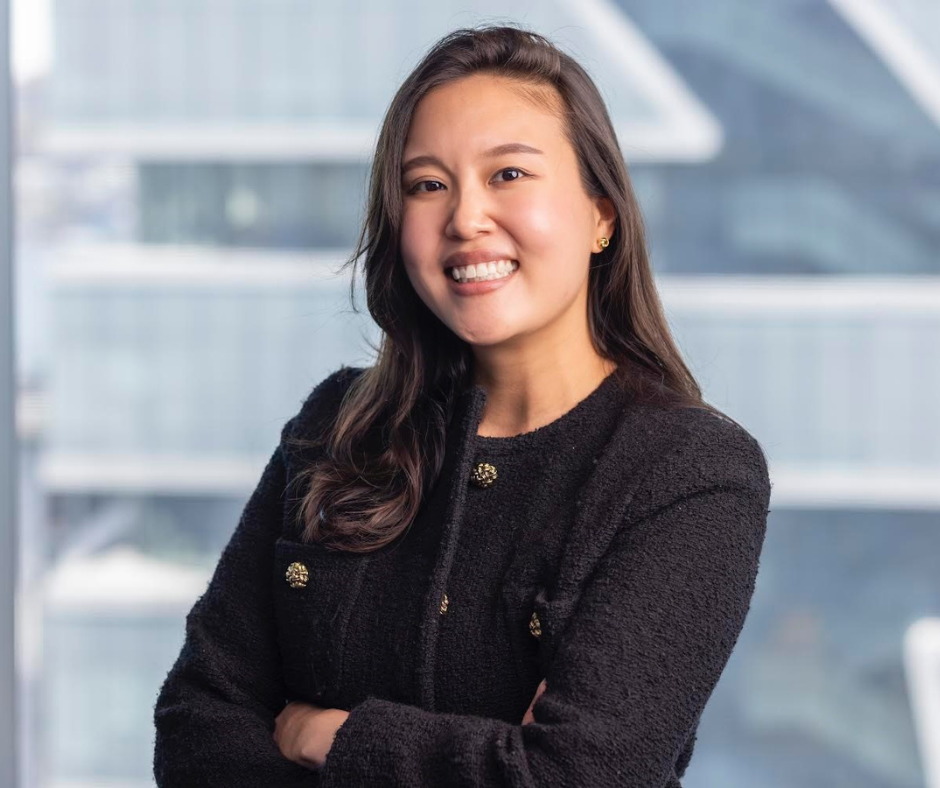
LISTEN ON: APPLE | SPOTIFY
Sarah Hwang had been thinking about starting a food business for years. When she got to Columbia Business School, she stopped thinking and started building. She took every entrepreneurship class she could find, developed her product concept, and by the time she was a rising second year, she had an early prototype and a business card printed the night before her first Summer Fancy Food Show.
She walked that show as a student, Ziploc bag in hand, doing research and getting her first real market feedback. What she learned confirmed what she already suspected: the category she wanted to build in barely existed.
That product became Gamsa Foods, a Korean-inspired breakfast brand. Their first product is an instant savory oatmeal inspired by the rice porridge she grew up eating, currently available in sesame garlic.
Subscribe to the Food Means Business Podcast with Hudson Kitchen founder Djenaba Johnson-Jones to hear the personal stories and "secret ingredients" of abandoning your day job and starting a CPG food business.
Tune in to hear...
How she met Djenaba at the Summer Fancy Food Show with just a Ziploc bag and a business card
The 7 to 8 years of market research she had stored in her phone before ever launching
Why she chose entrepreneurship over going back to corporate after graduating from Columbia, what therapy had to do with that decision, and what it took to make that call
What happened when she exhibited at the Summer Fancy Food Show for the first time and why the response from buyers, press, and customers gave her the confidence to go all in
Her Amazon strategy, what the data told her, and why she is adding a cup format to reach her customer where they are
Her advice: know your why and your 10-year goal before you build
To get more Food Business Bites right in your inbox, sign up for our newsletter at thehudsonkitchen.com.
About Sarah Hwang
Sarah Hwang is the co-founder and CEO of Gamsa Foods, a Korean-inspired breakfast brand. Korean American and a Columbia Business School graduate, Sarah spent 8 years in strategy and operations before going all in on Gamsa. She built the brand alongside her co-founder Ruby, a fellow CPG lover she met straight out of college. Her long-term goal is to exit and become a VC for minority and women food founders.
Connect with Sarah and Gamsa Foods:
Visit the Gamsa Foods Website
Find Gamsa Foods on Amazon
Follow Gamsa Foods on Instagram
Connect with Sarah on LinkedIn
Stay Connected with Djenaba Johnson-Jones:
Visit Hudson Kitchen
Follow Hudson Kitchen on Instagram
Connect with Djenaba on LinkedIn
-
Djenaba Johnson-Jones (00:01)
Hello, I'm Djenaba Johnson-Jones, founder of Hudson Kitchen and host of the Food Means Business podcast. My guest today is Sarah Hwang, co-founder and CEO of Gamsa Foods. Welcome, Sarah. I'm so glad you're here.
Sarah Hwang (00:12)
Thank you so much for having me. Likewise, likewise, I'm so excited to be on here. It's definitely a full circle moment from like exactly what, like almost two years ago now, listening to the podcast and now I'm on it. So it's a big pleasure.
Djenaba Johnson-Jones (00:28)
So let's talk about how we met, because a little different from how I've met the other kind of boot camp folks. So I'd love to hear from you.
Sarah Hwang (00:39)
Yeah, so I met Djenaba through Hudson Kitchen specifically at the Summer Fancy Food Show almost two years ago now at this point. I was a rising second year at Columbia Business School and had an idea that was early in the works that I was working on that summer as my full-time internship, which is now known as Gamsa Foods. But back then, it was still in the very early stages in a prototype, basically, where I had an idea of a savory Korean inspired oatmeal.
Sarah Hwang (01:09)
literally just an idea and just printed out business cards and staples the night before and purchased the rights to the name Gamsa, the domain online for like $2. And went in really just with this like very like, you know, intent of trying to understand the market and also understand what resources are available for founders in the early stages of launching a food startup. Since Columbia wasn't really known for really consumer goods, really more so in tech. And I walked the show as a student.
Sarah Hwang (01:39)
and got.
Sarah Hwang (01:40)
this kind of ticket essentially through the SFA and just walked around with like my little business card and my product in a ziplock bag and hung around the, I guess they call it the incubator village and was able to visit so many different other, I would say like commercial kitchen accelerators and resources that were local to either New York or New Jersey and was able to talk to so many other, I would say folks in the industry that provided services similar to Hudson
Djenaba Johnson-Jones (01:41)
you
Sarah Hwang (02:10)
Kitchen in terms of food science support and everything. But Djenaba really was the first person out of the dozen or so that I spoke to that really took me seriously, as well as Liz as well, in terms of being able to really hear me through in terms of my vision, having a two-way conversation in terms of not just the resources that Hudson Kitchen could provide for a commercial kitchen space, but what are other things, questions I have in mind in terms of starting a business? Because back then, I did not even know where to begin in terms of
Sarah Hwang (02:39)
of insurance for food liability, what type of coverage I needed for that, how to incorporate the business, difference between Delaware Incorporation and New Jersey, what exactly do I need to do, where do I even get my food manager license, like do I even need one? So many questions that again, like I didn't even know like what to ask. And I think when speaking to others, I think there are very much good intent of wanting to bring in people who are serious about starting a business and being a student, I think.
Sarah Hwang (03:09)
there are some red flags in terms of how serious am I with this? And I was very serious. And I think Djenaba and Liz really were the first to really take me seriously and take a chance and also to share all the wonderful resources that were available. I can't thank you guys enough in terms of really not looking at me with like five heads on with the product, like it is a block bag and coming into the trade show for the first time ever, not having industry experience and not knowing what to expect for my first trade show.
Djenaba Johnson-Jones (03:24)
You
Djenaba Johnson-Jones (03:39)
very serious. I was very impressed when I first met you. So definitely you asked all the right questions. It was fantastic in my opinion. So when folks are prepared and ready, like it makes it easier for anyone to like help you. And so you were just kind of there and had done some research and started working and you're ready to be ready to be helped. So it made a lot of sense to me anyway.
Sarah Hwang (03:41)
you
Sarah Hwang (03:50)
Thank you.
Sarah Hwang (04:05)
Definitely. Thank you. think a lot of it too is perhaps that, you know, I've had comments early on in the beginning of my journey with this, where I think, you know, being at business school and being a student at the time, I think there is a bias that like, you know, I think most students would most likely lean towards like tech world in terms of startups, especially being at Columbia. And I think for me, like I've always been passionate about consumer goods. So I was coming in with a little bit of like, I would say personal knowledge and I would say listening to many podcasts like this or how I built this.
Sarah Hwang (04:35)
And I think with that knowledge of mine, I very much was very serious about wanting to start a business in this space, which helped. I think, you know, I've had comments being like, like, you're in business school, you're have a lot of, you know, loans after graduation. Don't you want to work for a big company? Why do want to start your own food business? Because the journey is very difficult. But just because it's a road less traveled doesn't mean that it's something that, you know, it's going to prohibit me from doing. I like a good challenge. And I definitely, for me, business school was all about understanding, could this
Djenaba Johnson-Jones (05:00)
Great.
Sarah Hwang (05:05)
a lot, you know, a profitable business and also am I pursuing something that has a like a market opportunities? Can I find product market fit?
Djenaba Johnson-Jones (05:15)
Right, right. So tell us a little about the product and kind of how you came up with the idea.
Sarah Hwang (05:20)
Yeah, so my brand is called Gamsa Foods and it's the first, I would say, it's, to take a step back, it's a Korean inspired breakfast brand on a high level. And our first product is a instant savory oatmeal inspired by Korean rice porridge. I'm Korean American, so I grew up eating a savory breakfast. So think like egg and spam over rice. Or my personal favorite was rice porridge, also known as chuk and Korean or kanji and Chinese. And so it's very common when you hop on a plane on Korean air to fly to Seoul, for example, they're going to serve you rice
Sarah Hwang (05:50)
porridge as a breakfast option, as well as like a western style omelet, but the rice porges are very popular and it's all like lean savory. Even some of the sweeter profiles like red bean, for example, is still more salty than sweet and it's one of those where when I started working full-time, moved away from home and traveled a lot as a consultant, I realized that anything that's remotely convenient for breakfast that doesn't require tons of prep work like you know requiring a stove or an oven
Sarah Hwang (06:20)
was very sweet, like even at, stayed at many, many Marriott's during my time traveling for work. And at all the Marriott breakfast buffets, whether it's Marriott or Hyatt or whatever it is, the breakfast bar is really only...
Sarah Hwang (06:34)
like very sweet, would say. Everything was sweet. And anything that's convenient required you to grab like a plate to, you know, load it up with eggs and sausages. And I just didn't have time in the morning to really have like a complete like savory breakfast that's American style, bacon, eggs and whatnot during my commute to work. And I kept thinking about the instant rice porridge that I really, love. It's really homemade what I grew up eating, but the ones where I would grab from H Mart. But given the fact that I lean towards
Sarah Hwang (07:04)
trying to eat more better for you products. A lot of them have tons of preservative in terms of the convenient ones and also has like a very plasticky taste due to the preservatives. And so I'll just say that our product is really similar to those instant rice porridges. It tastes very similar in terms of the flavor profiles. Our first flavor is sesame garlic. So it really has those like umami notes into it that you often get from instant Asian or Korean food products, whether it's ramen or these instant rice porridges.
Sarah Hwang (07:34)
or stews without the preservatives in it and all that I would say like sodium and ingredients that you know I would say a lot of American modern consumers are steering away from. So we only have one flavor right now, one product that we're focusing on right now for many reasons but yeah.
Djenaba Johnson-Jones (07:54)
That's it. I want to talk a little bit more about that later, but tell us like how did you end up getting started? you know, we met and you were still in school and I believe you also have a co-founder. So talk a little bit about her as well.
Sarah Hwang (08:04)
Peace.
Sarah Hwang (08:06)
Yeah. So, in terms of how this started, I mean, it really started from a point where, you know, I was at business school and I've always been interested in entrepreneurship in my MBA application. They have a question about what's your 10 year long-term goal. And for me, I was very explicit about wanting to step away from my corporate job and starting my own company, my own brand. And it would be in food and beverage. And I didn't call it Gamsa Foods at the time, but it was basically the early beginnings of it. And I didn't really have a specific, I would say product in mind, but I knew I wanted to
Sarah Hwang (08:36)
be in consumer goods, specifically in food and beverage, because that's where my passion is. But prior to it, my experience has been in strategy and operations at an industrial supply company. So very different products that I was working on. was in a company that was selling nuts and screws, and now I'm in breakfast aisle for consumer goods. so that's actually where I'm at. My previous job is where I met my co-founder, Ruby. We met straight out of college as when we were 12.
Sarah Hwang (09:06)
22 years old. And we were coworkers initially in the same like management rotational program. And then we quickly became friends when we realized we both have this shared love for Korean food and Korean culture. She's Mexican American. And so she was the first person outside of, you know, Korean Americans that I met who had heard of BTS and Blackpink and loved like Shin Ramen. And we spent just so many of our time together during those early years in our career going to Whole Foods late at night since that was the only
Sarah Hwang (09:36)
opened in the suburbs of New Jersey for late night food options and we would go to the hot food bar and just walk around Whole Foods and that was like that was in 2017-2018 and that was like the rise of poppy in the early days and siyate foods and umsum and and so many others in that time and so we would always talk about like the different products if we were to launch a product what would it be and it would always be within the Korean
Sarah Hwang (10:05)
food section. And just again, mind you, this was back before the rise of K-pop demon hunters, before I would say BTS really became the global group that it is today. It was like the early beginnings of that brewing. And so we remained in touch all these years. She left about two years after we had started to work within CPG. But I always kept in touch with her, really thinking about the different types of product ideas that I had during my visits to Korea, sending her different
Sarah Hwang (10:35)
packaging design. And so all of that, you know, I didn't have, would say the business plan put together, I guess, formally per se, but essentially like my phone house, all of that, my business plan, where it's, you know, I think for many folks, it's like, it kind of seems like it's overnight in terms of how comes it came to be, but it was almost like eight, seven to eight years of collecting market research. Understanding, yeah, yeah.
Djenaba Johnson-Jones (10:59)
Yeah, that.
Djenaba Johnson-Jones (11:02)
No, go ahead. Go ahead.
Sarah Hwang (11:03)
I was just understanding just the opportunities in the market and what trajectory certain brands had in terms of exit. like, for example, like Poppy was really leaning into the better for you soda alternative. But they initially launched it as a gut friendly beverage, right? And they kind of shifted and I was taking note of that. And same thing with Siate Foods for both Ruby and I, she's Mexican American. We loved the way in which they took a household staple.
Sarah Hwang (11:33)
Mexican-American staple and made it, which was tortilla, and made it gluten-free and grain-free, which really was solving a problem in terms of offering a solution to those who cannot consume gluten. And I think for us like that, market research was like the early stages of Gamsa. I'll just say that when I started business school about eight years later, which was in summer of 2024, I knew that long-term I wanted to do this, but didn't have
Sarah Hwang (12:03)
have the guts to actually really pursue it until I started taking entrepreneurship classes. Like I just found myself taking tons of all of my electives rather than taking things like business analytics too, or negotiations. I was like, I'm just going to take all these entrepreneurship classes because they seemed the most exciting. And I was like, it'll be easy. Like it'll be an easy way for me to explore what maybe entrepreneurship is like without committing to it. But after my first class, which
Sarah Hwang (12:33)
which was entrepreneurship like 101, we had to work on a final project which was to pitch an actual business idea.
Sarah Hwang (12:40)
which for me was Gamsa. And it really just like I think that class allowed me to really dive into the market research I've done over these years and understand that there may be lots of products available or there may be a lot of ideas for products that people may have like really delicious food products out there. But if you're not solving a very clear problem that consumers will turn to, it may not be scalable for a business that could see an exit similar to poppy or siesta foods. And I think that really stuck with me because
Sarah Hwang (13:10)
I think I was at a point in my career where I didn't know what I wanted to do next. I felt like consulting and management consulting was the right thing to do because it just felt like that's what everyone did going into business school and getting an MBA. But I think for me at the time I was 28, I was like, wow, I feel like I've been doing everything right, checking off the box. And I never really took a risk or chance on myself at that point. And I was like, I want a family in the next five years, forever family.
Sarah Hwang (13:40)
to able to say, I took a chance on myself, whether it's, you know, starting something of my own or going into an industry that is very new to me. And I wanted to go into CPG, but I struggled to get internships within CPG because I didn't have any sort of food background or even marketing. My experience was in operations and fulfillment at industrial supply company that was around for 200 years. know, it's very hard to break into that space right now, given how competitive it is and with the rise of AI. And so I'll just say it's a lump.
Djenaba Johnson-Jones (14:01)
You
Sarah Hwang (14:10)
in the context of how Ruby and I had met. I think really for me, like starting Gamsa was taking a chance on myself, but also really going in with the intent that if I'm going to do this and I'm going to take on like loans and all this risk for myself, then I want to do this in a way that I know it may be scalable. So I can see a return on my investment, not just taking a chance on myself, but also, you know, I think I want to build something that can be sustainable and not just a, you know, like
Sarah Hwang (14:40)
a side project because then why would I forgo taking a full-time job to do this full-time you know?
Djenaba Johnson-Jones (14:44)
Right, right. So yeah, so you decided to go all in and you skipped out on the management consulting route that some people take after business school and really just decided to focus on comp style. How did you make that decision? How did you tell your family? Give us a little bit more information.
Sarah Hwang (15:01)
Thank
Sarah Hwang (15:03)
Yeah, I mean, it's not as simple as I make it sound. think it was a lot of it to be very transparent was a lot of like therapy. So much to get to that point, because essentially I worked in corporate, I worked in internal management consulting, right, for almost eight years. And I had built a safety net for myself. And I always tell people when they hear TikToks or, you know, talk to other founders and hear, you know, I quit my job to do my pursue my dream. I always tell people there's more to it because there's often either
Djenaba Johnson-Jones (15:11)
Hehehehehe
Sarah Hwang (15:33)
support, they have a partner who makes, you know, both incomes enough to support two people, right? Or people plan for it, right? They're able to take a leave of absence from their job and not have income come in to be able to pursue this. And for me personally, was a lot of it was self-work through therapy to understand what opportunities were in front of me, truly, objectively and not subjectively thinking about my own upbringing or my fear of taking risks.
Sarah Hwang (16:03)
And for me, I had saved up a lot during my eight years working corporate to buy a house, not for myself, but for my family. And transparently, my therapist would always say, why is it that you want to do it for your family and not yourself? What does Sarah Hwang want? What does she want for herself? And I spent almost six months while also starting business school really trying to answer that question at business school. What is it that I want? And it kept going back to entrepreneurship. And I felt like throughout my life, I always chucked down
Djenaba Johnson-Jones (16:18)
Right, right.
Sarah Hwang (16:33)
the things I wanted for the things that I should do being a daughter of immigrant parents from a low income household. I think I really leaned into the inner voice and also to really thinking about what are milestones, KPIs that Gamsa would need to hit for me to do this full time. Because I was still very much serious about recruiting, going to recruiting that fall semester of 2024.
Sarah Hwang (17:00)
to be able to look for jobs right after graduation in May of last year. And I put together those milestones with my professors at the time. And a lot of it was around sales numbers and also other markers in terms of are there opportunities for this to go viral? Are there certain press targets that we want to do? So fast forward to May of 2025, which is right around graduation, you and Liz had reached out about going to the Summer
Sarah Hwang (17:30)
food show for the first time. You guys had openings and offered this opportunity for it to apply and we got in. And so with that right around the corner, I use that as kind of like the North Star to say, okay, there's a sign from the universe for an opportunity for us to market this publicly and get some feedback. And it put together just this high level goals of like, what retail opportunities do we want to hit? We were not ready for retail, but we're like, you know what, if we have two buyers
Sarah Hwang (18:00)
that express interest in this product and want more information, that may be a that we're maybe on to something. And then press. We go like, okay, if we get like one influencer to talk about us and post us, that would be interesting, but maybe not significant enough. If we have a major news outlet that posts us, like two to three, like that may be a signal that like we need to do this and be aggressive with the strategy. And then third being, know, what are we seeing in the market? Like, do we see an interest in Korean food? How is how is Gamsa
Sarah Hwang (18:30)
the context of the larger market opportunity. Are people ready for Korean flavors? And that summer was very interesting, June of 2025, because we had K-pop Demon Hunters, right? The rise of K-pop Demon Hunters just like was a snowball effect. Everyone was talking about Korean flavors. And then two, we were written up by Bon Appetit, Food Network, Better Homes and Gardens, Fox News, like, and so many other like podcasts featured us too. And we got a lot of shout outs. And mind you back that we did
Sarah Hwang (19:00)
even have like our product box. I still wasn't completely sure if this would be something that I would do full time after graduation. And I was like, my gosh, like we have so many orders coming in now. It increased our orders by 10 times than what we were, you know, experiencing prior to it on our Shopify storefront. And I was like, my goodness, like this is, this is something that like, you know, is beyond what we had imagined going in. And then on top of that, we had opportunities to connect with both Whole Foods and Wegmans,
Sarah Hwang (19:30)
and a couple other retailers that were really interested in this concept of a savory breakfast solution that's really convenient. with that in mind, I was like, okay, this is something that I need to pursue just right now because there's a lot of opportunities here. And on top of that, too, we were being included in the roundup for both SFA and other food trends of the rise of Korean cuisine and K flavor in the midst of the rise of K-pop.
Sarah Hwang (19:59)
demon hunters. so I the biggest thing, my biggest takeaway from business school and one of my entrepreneurship classes was you may have a really good product, but if the market isn't ready for it.
Sarah Hwang (20:12)
And if you're not solving a clear problem, then timing may not be right. And you may have to wait for the right timing. timing is right. And if you're not aggressive enough, then you're going to lose out on opportunity. So with that in mind, was talking to my professors and a couple of mentors. was like, okay, I need to, I think this is my time to go all in. This is like my signal. I need to go all in. And so I use that to, you know, raise capital through just family and friends. Really it's friends because I don't have the family network that both my co-founder and I didn't
Sarah Hwang (20:42)
and have the network to raise through our family. But they were all business school classmates who had heard about and seen and supported my journey throughout a year and a half of business school and got to try my product in the early stages and were eager to take a chance on me and this idea that they were part of the journey of.
Sarah Hwang (21:01)
So yeah, it's full circle moment, but to kind of go back to what your initial question was about the journey to decide to quit my job and everything. Like I think it was months and months and months of just trying to understand what is it that I want and what really is the risk of taking a chance on myself? Because I did have a safety net that I had built my personal savings to purchase a house, for example, to put a down payment for a house for my family, because I thought that was the right thing to do. You know, and I think in for many ways, I
Djenaba Johnson-Jones (21:23)
yeah.
Sarah Hwang (21:31)
wanted to retire my parents too. That was my initial goal. And it's still my dream, but it's not the dream now. And I've been transparently living off my savings, liquidated a portion of my retirement as well to sustain the next six months to really just.
Sarah Hwang (21:51)
go all in on this. But it's also, again, like I always tell my friends who are interested in entrepreneurship that do have their corporate nine to five jobs that like, if you're able to stay there as long as possible and work on your idea on the side, which essentially what I did while I was at business school, right, in a safe environment where, you know, it was a sandbox and I had my needs met in terms of housing and everything, like to do so because especially like now I think there's a lot of glamorization about quitting your
Sarah Hwang (22:21)
know, boring 9 to 5 to pursue your dream, but it is more difficult.
Djenaba Johnson-Jones (22:28)
Yeah, yeah, I'm sure.
Djenaba Johnson-Jones (22:30)
So I wanted to talk today about your sales channels and like how you decided to sell Gamsa, which I think is a little bit different from some others. A lot of people are looking to be in, you know, lot of the, you know, all, all be everywhere, essentially, like where, whether it's a retailer, whether it's Amazon or whether it's like, you know, selling through Tik Tok or you're just your Shopify website. Talk a little bit about what you guys have kind of decisions that you've made around your, how you're going to sell the product.
Sarah Hwang (23:00)
Yeah, that's a great question. For us, we really want to understand and get to where our customers were at. I think the way that we build our product is really tech focused in many ways. I've had a lot of founders mention that the way that we think it's very tech, which I attributed to just my background at Columbia, since they're very tech focused. think for us, really first with our prototype of our product, which was our original recipe that was in a Ziploc bag that we were initially calling a rice porridge. That was our MVP.
Sarah Hwang (23:30)
And we initially were getting that in front of as many people as much as possible to try it. And eventually it got to a point where we were able to launch a MVP version of it on our Shopify storefront. And our goal from day one has always been to gather data, to understand what is it that, what's the consumer behavior? What are consumers looking for in the market? What are they not satisfied with in terms of solutions? And so breakfast was our initial assumption of the industry that we want to break into because especially in oatmeal
Sarah Hwang (23:59)
hot cereal, haven't seen innovation in that space over the past decade. And it's a space that's very sleepy. When we talk to buyers, for example, and we talk about category reviews, they were saying that they don't really have one set in place, for example, at Whole Foods for hot cereal, because it's just not a topic or a category similar to, let's say, like soda. Right. I feel like there's so many different types of better-fruits sodas right now in the market. And so we want to find that white space, because at one point, soda was also
Sarah Hwang (24:29)
a blank space where it wasn't a category that was very review before Poppy Rose. And so I think with that concept and framework in mind, we just applied it to the way in which when we finally had a finalized product with packaging and branding and our recipe formulated, we wanted to make sure that we continue to seek out opportunities to gather data points. And initially we wanted to go into retail because, you know, although it's not like, you know, an e-commerce channel where we can quickly
Sarah Hwang (24:59)
gather analytics, we're like, oh, well, we could segment different areas in terms of like, you know, a small grocery store in Williamsburg versus, you know, a grocery store that's in the Upper East Side or Harlem. You can segment customers based off the average demographics and income in the area, Based off zip code. But we found ourselves really struggling to have conversations with even independent retailers, given the fact that at the time our pricing was really high. We weren't able to have
Sarah Hwang (25:29)
the means to produce large amounts to bring down our cogs and We ended up having to take a small like pivot and take a step back and say okay We could potentially just force ourselves into retail and just sit on the shelf at the pricing that the retailers want But we are gonna run out of money real fast You can't be a business if we run out of money. we are operating on a constant deficit And so we're like, okay. Well, where do they want us to be then?
Sarah Hwang (25:59)
retailers in terms of sitting on the shelf at a price point where we can afford it.
Sarah Hwang (26:04)
it would be instant noodles or the international aisle, which just doesn't have the same velocity and traction that breakfast aisles have. And so we felt like that wasn't a good solution as well, at least at the time, because again, our goal was to gather data points. We want high velocity. We want high visibility. And so we were doing a lot of deep research and found ourselves constantly going back to Amazon and also coming out of fancy food. had an Amazon buyer essentially reach out to us about Amazon FBA.
Sarah Hwang (26:34)
really felt that our product would be a good fit given the fact that they on their end they could see that customers are looking for better for you oatmeal not necessarily savory oatmeal but better for you oatmeal it's a category that hasn't been growing on their end and then on top of that too our product is dry shelf stable very light
Sarah Hwang (26:51)
won't be, it's not easily damageable because it's just pouches of oatmeal that's sealed and can step on it, crush it. It's not glass and it doesn't take up a lot of space on a palette. So you can stack up a ton to really save on Amazon fees. And so she just felt like it was a very good fit. And so with that in mind, we took a, you know, look at the fees and everything and really, wow, we could actually be profitable being on Amazon compared to, you know, maybe other brands that may have different products because of the type of product that we have. And we can gather some data points. That was a big selling point.
Sarah Hwang (27:21)
was we can collect insights on...
Sarah Hwang (27:26)
our customers. And then on top of that, it felt like a sandbox for us, for us to really go in on marketing and be able to sell and market our product in a space where consumers are going to purchase food products. So for example, like we could have focused on Shopify as our main sales funnel, sales channel, mean, and really push all of our meta ads and UGC content to feed into Shopify. But customers don't associate
Sarah Hwang (27:56)
like oatmeal and cereal with a Shopify storefront and the conversion rate to get customers to actually check out is really low from our historic data points and also doing research. I think if we were a premium olive oil or a chili crisp or, something that's like more like premium and niche, would have been a better spot. Shopify would have been a better, shop for us. but with that in mind, we're like, okay, Amazon seems to be the only thing that has all these like check that checked all our
Sarah Hwang (28:25)
boxes in terms of wanting to gather data points, be able to meet where the customers are going to be in terms of searching for pantry staple items. And then also to most importantly, be able to do testing, like quickly being able to do A-B testing and understand what about our product appeals to customers and what converts into our actual purchase. And so, yeah, that's a big reason why we decided to go all in on Amazon was, you know, it's not like we're just going to be at a loss from the fees that we're actually able to.
Sarah Hwang (28:55)
At our first two months, we were breaking even, which was still great for us. We weren't at a deficit. And we're now at a point where we are able to make some profit off of Amazon. But we are now trying to focus on scaling that. But we kind of hit some roadblocks there, which is why we're pivoting right now as we speak. So I'll share that later.
Djenaba Johnson-Jones (29:01)
Yeah.
Djenaba Johnson-Jones (29:16)
Sure. So talk a little bit about what you've been able to, kind of the data points you've been able to get with Amazon. Is there some ads that you've run with them where you were able to seek on it quickly, like with the changes that are, I'm gonna say this, see quickly how the increase in sales based on kind of like the creative.
Sarah Hwang (29:37)
Yeah, it's a great question. I think when we first launched, for us, it was just getting it set up. We didn't want to think too much about, we need to get the product name correct, so perfect it and use data points and hire these really expensive agencies to get that started. Same thing with our assets. We knew for a fact that we didn't have our packaging completed, so we didn't want to invest in updated visual assets. So we were like, OK, let's just go with what we have currently and take some photos on our end.
Sarah Hwang (30:07)
with our phones literally to try to get some high resolution photos as much as we can and just to get the product on the market. we launched at the worst time. So if anyone is listening to this and wants to launch on Amazon, I would just advise not to even explore launching Q3 or Q4. Like we wanted to launch a Q3. It got pushed back due to production delays. Launched in Q4, I wanted to launch in September, but launched in end of October, early November, which is the worst time ever because you're competing
Sarah Hwang (30:37)
with large brands that are providing very heavily, like big big discounts for Black Friday and the holiday season. So, and also Amazon is swamped with tons of like holiday inbounds. So definitely don't launch Q3 or Q4. So, with that in mind, we're like, you know what, like we're already going to be lost in the algorithm. Let's just get on to the market and just start collecting data points and initially cast a wide net to do Amazon ads. We've never done it before. And my co-founder has done it
Djenaba Johnson-Jones (30:52)
You
Sarah Hwang (31:07)
before for shopper marketing for some slightly larger brands as a consultant, but
Sarah Hwang (31:12)
was first time for us doing it for a new brand. a lot of it was very much our goal was to understand what's the behavior of consumers. Even if we push out Amazon ads, what would happen? And we set a very tight budget in terms of $200 a month, just to really just understand like what the ROAS would be and really understand the keyword searches and really just figure out like where can
Sarah Hwang (31:42)
and we sit in the market and week by week do testing. If we have certain targeted keywords that's leaning towards more Korean flavors and culture, what does that look like? If we lean towards like savory and low sugar, what does that look like versus fiber? I just put together different like segments of keywords and tested those out. And we found that savory and not sweet were really what was driving our conversions as well as the...
Sarah Hwang (32:11)
the fiber benefits of it as well as being a better for you product. Not necessarily the Korean flavors, which is what we initially assumed, which is really interesting.
Djenaba Johnson-Jones (32:23)
So thank you for sharing that. I was wondering, you talked about scaling now. So you've been on the Amazon for a little while, so you have some data. And so now you're ready to grow the business. Talk about how you're doing that.
Sarah Hwang (32:38)
Yeah. So like what I said earlier, in terms of like our goal for gathering data points, like I think for us going into Q1 was really start to understand, you know, take applying the learnings that we had from like end of Q4 and scale them up. And we were hoping to see pretty aggressive growth, like doubling, tripling each month. And we kind of hit like a wall essentially with our growth where we were able to hit the double in growth between like Q1 and Q2. However, we're realizing that
Sarah Hwang (33:08)
are we get tons of
Sarah Hwang (33:11)
site clicks and visits onto our page. We're able to convert our customers to go into our page and look at our product. But people are really hesitant to purchase our product, given the price point of $19, which we're planning to scale down as we hit economies of scale. But for five servings, that's a lot. It's a big commitment. And Amazon's also not a discovery channel. That's one of the things that we've learned as well is that it's not a place where customers go to purchase a new product for the first time, because it's not like you can bring it to the store and say, I don't like this, especially if we
Sarah Hwang (33:41)
product you can't just return it like Trader Joe's and say I don't like it I want to refund. And so with that in mind we're like okay well our product is new it's a savory oatmeal which is pretty different than all the sweet oatmeal on the market.
Sarah Hwang (33:56)
Committing to five is a lot. And so we've been thinking about all of last year wanting to launch a cup format. There's many reasons why we did it initially due to cost of production, but we're now at a point where we can invest into cups. And after talking to our investors and mentors, we really decided that cups is going to meet our customers. Again, going back to the theme of where are our customers, what are they saying to us? And essentially right now we have tons of signals saying, our customers are curious about our product or the...
Sarah Hwang (34:24)
conversion from a meta ad to our Amazon site is pretty high. We're able to get people to come into our website, but they're not checking out because again, these are assumptions. There seems to be a hesitation there about purchasing for the first time and committing to five servings. And so we are focusing on the cut formats of their same flavor to launch this summer, hopefully by the end of June at Summer Fancy Food, to really be able to get into retail storefronts and more of the, I would say, traditional discovery channels.
Sarah Hwang (34:54)
as our main focus for the second half of this year. think like airports, grocery stores, cafes, maybe even schools, and just really being on the shelf at a more, I would say, stomachable price point closer to, let's say, less than $5. Which people are, technically per unit cost is still pretty high compared to a box of five servings for $20. But psychologically people are like, oh well, I'm only paying $5 or like $3.99, $4 to
Sarah Hwang (35:24)
buy this and to try for the first time. If I don't like it, then it's not like too much of a waste compared to just committing to five servings for a box. And then we're going to continue to scale Amazon, but we want Amazon to be more so a channel for repeat purchase. So we want, we're going to focus more on the subscribe and save feature as well as offering more bundling opportunities as well for the multi-pack. So.
Sarah Hwang (35:51)
We're taking a small pivot right now where we're still growing Amazon, but we realize that we won't be able to see the growth in revenue and scalability with just focusing on the box. So we're kind of having two pipelines for our product and the slightly different distribution strategy changes to be able to achieve our growth for this year.
Djenaba Johnson-Jones (36:11)
I'm interested to see how that goes. It seems to make a lot of sense just because I can go and buy the cup and try it. then my next step is probably going to be I'm going to go onto Amazon and see how can I get more of this product. So I can't wait to find out how everything turns out.
Sarah Hwang (36:28)
Likewise, like I said, we're really excited. have been kind of, luckily we're not having to go back to square one where it took almost like nine months to really develop our product with food scientists and get it ready for production. Like we know for a fact that like, you know, our recipe can be changed and scaled down or scaled up depending on the vessel that we're using. But we still have to kind of refine the types of oats that we're using. For example, like the rolled oats that we're using, they're not great for steeping. And because it doesn't absorb the water,
Sarah Hwang (36:58)
as much and then that impacts the flavor so we're doing a lot of R &D there but we're working along through this as quickly as possible because we're trying to get a pro like at least a presentable not even prototype at that point MVP where we have the cup and the branding figured out as well as our recipe formulation to show buyers at the end of June. Yeah.
Djenaba Johnson-Jones (37:22)
So exciting. So you've done a lot in the past two years. What advice do you have for someone that's just starting out?
Sarah Hwang (37:31)
That's a great question. I think for someone who's just starting out, think a good thing to focus in on is understanding your why.
Sarah Hwang (37:41)
Like understanding what, why are you doing this? What's, what's the reason behind your drive for starting a business or particularly in food? Because it's, it's a very, it's very long journey and really difficult. And on days where I feel like I want to give up, like I go back to my why. And I think understanding like, what is it that you're trying, where do you see this business or this idea and yourself 10 years from now? Because I think keeping that vision in mind and where I want to see myself in 10 years is again, that kind of like the North Star.
Sarah Hwang (38:11)
for me in terms of either making really difficult decisions or when I'm at a point where I feel like things aren't going the way I expected. It's like, well, that's where I see myself in the business in 10 years is what motivates me. And I share this because I often in the world of food business, often I feel like we don't talk about scalability as much as like maybe in the tech space. And I bring this up because I think the 10 year goal where you see yourself really impacts the way in which you
Sarah Hwang (38:41)
build your business and how aggressive you want to be with your business. Because if you want this to be something where you are able to, for myself, like I want to be able to in 10 years from now, like exit. That's my goal. like, I want to be able to sell my business to a larger conglomerate to really have an impact in the breakfast space, to bring in more representation of Korean and Asian flavors. It's going to need a lot of capital, which means that I want to exit because, and also on top of that too, my goal is to want to be a VC.
Sarah Hwang (39:11)
particularly for food and beverage for minority and women founders. So that's my North Star for me is I want to exit at some point. I don't want to pocket the money. I want to be able to say, you know what, this is what I did with Gamsa. I want to be able to give back to other founders who have a shared vision of wanting to bring their own cultural identity into the grocery aisle, which is very difficult to do. But then also too, on the flip side, there are many other food business founders too who don't want to exit. And that's okay too. That's completely fine.
Sarah Hwang (39:41)
But the thing is, is that the way in which you make this business decisions will just be different. For example, I incorporated my business from day one, which is very expensive to do. I'm getting tax double both for the business and for myself in terms of income. LLCs is more tax favorable. And so these little things will dictate the way in which you build your business. And also too, that means that when you, especially right now, as you're, you know, deciding to go on Amazon, there's some founders where I talk to them like, don't, I don't think Amazon makes sense in many ways, you
Sarah Hwang (40:11)
And I think again, like it goes back to kind of like it makes your life
Sarah Hwang (40:17)
easier as a founder if you can quickly answer why are you doing this and where do see yourself in 10 years with this business? Because those like really difficult days or really difficult decisions then you're able to quickly able to like pivot or you know complete those tasks by keeping that in mind. So that's the big thing and that was an advice that I had a professor share with me as well because otherwise it's so quickly to like lose yourself and the initial
Sarah Hwang (40:47)
intent of why you're doing this because I know again there's many even founders in tech that have mentioned that they want to let this be something that they can hire their friends and family and stuff and that and again like if they're not looking to exit the way that they build it would be different so
Djenaba Johnson-Jones (41:02)
Right, that makes total sense. Thank you for sharing that. So here at Hudson Kitchen, we call a money bell that we ring when we're celebrating something. So I'm wondering, what are you celebrating?
Sarah Hwang (41:13)
That's a great question. What are we celebrating?
Djenaba Johnson-Jones (41:17)
It could be personal too, it doesn't have to be necessarily professional.
Sarah Hwang (41:21)
Yeah, I think there's so many things that we're celebrating that I hope I can share publicly in a couple of weeks, or months. But right now what I think I'm ready to share is I think for us,
Sarah Hwang (41:35)
Amazon is finally working. As I mentioned earlier, we finally saw the Q1 to Q2 double in growth. So I think that's the big thing was we finally hit a pivotal moment in March where we able to see a lot of big change in our sales month to month. And it took us two months to two degree months to figure that out. And now we're just trying to repeat that in April. So think that's a big thing to celebrate.
Djenaba Johnson-Jones (42:04)
Yeah, that's huge.
Sarah Hwang (42:05)
Because again, I have no background in Amazon. We did not hire any Amazon agencies and stuff. know they must be wonderful, but we were really, really strapped. So that was a big milestone for us. Thank you.
Djenaba Johnson-Jones (42:18)
Congratulations on that. So Sarah, thank you so much for being here. Let everyone know where they can find you.
Sarah Hwang (42:24)
So as of right now, you can find us on Amazon. That's like our main sales channel. And then hopefully you could find us in a couple of retailers across New York City in the next couple of months, as well as some other retail channels. And I hope I can share more of that in the coming weeks with you, Djenaba, to share with others. yeah, and thank you so much for having me. It's really truly is a full circle moment because like exactly what, like two years ago, I was at a point where, you know,
Sarah Hwang (42:54)
with trying to find resources and trying to understand where to go with this idea that I had that was in a Ziploc bag, very, very early stages. I was at the other end listening to a of these podcasts, and I still do. I much still do when I'm or coming into work and stuff. But I think these spaces, these community spaces are really, really important for founders. And hopefully my story resonates with others or maybe provides a new perspective. So yeah, thank you.