
Why Market Research Is the Foundation of Every Successful Food Brand with Alli Meyer
LISTEN ON: APPLE | SPOTIFY
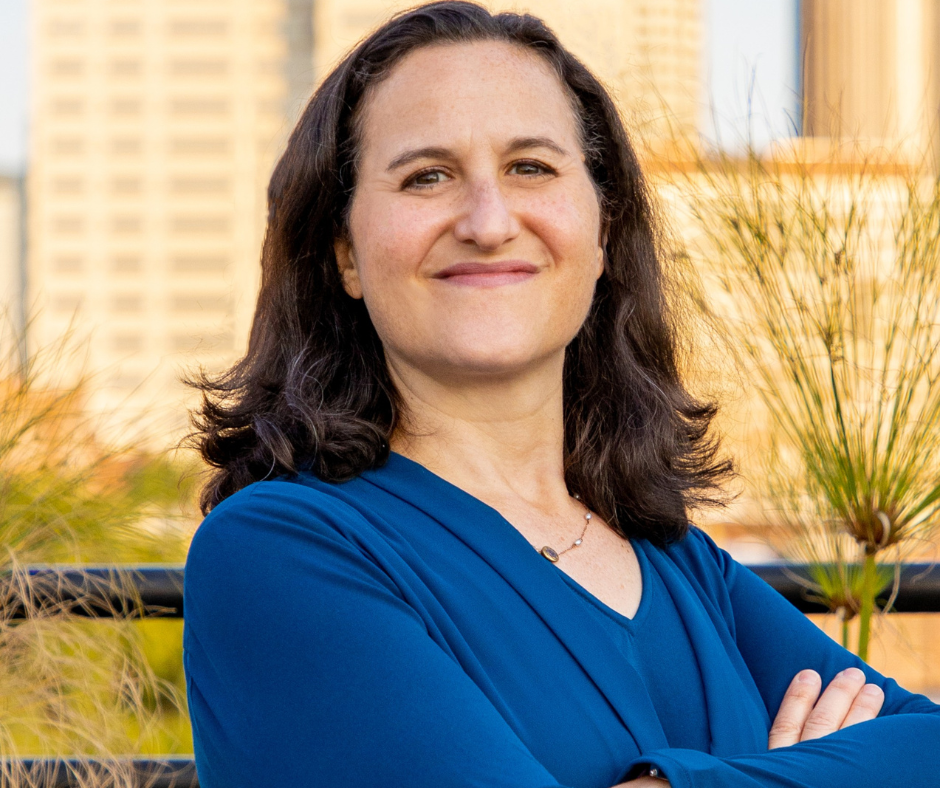
Alli Meyer started her career at one of the largest market research firms working with consumer products companies. It was there she learned not just how to read data, but how to think with it. That foundation carried her through years of brand work on the CPG side, including time at Applegate Farms before its acquisition by Hormel and Dr. Praeger's in its early days.
She now works with founders and brands as a market research consultant, and she joined the Food Business Bootcamp® as an instructor to help early-stage food entrepreneurs understand why research is not optional. It is the foundation for every other decision they will make.
In this conversation, Allie breaks down the difference between secondary and primary research, explains why most founders make the mistake of inserting themselves as their own consumer, and shares why the goal is not perfect research. It is confident decisions made from a place of knowledge.
Subscribe to the Food Means Business Podcast with Hudson Kitchen founder Djenaba Johnson-Jones to hear the personal stories and "secret ingredients" of abandoning your day job and starting a CPG food business.
Tune in to hear…
The difference between secondary and primary research and why you need both
Why free research tools, including AI, store walks, and Yahoo Finance, can get you further than you think
The two biggest mistakes founders make
Why research does not stop at launch and how it shapes every decision as your brand grows
To get more Food Business Bites right in your inbox, sign up for our newsletter at thehudsonkitchen.com.
About Alli Meyer
Alli Meyer is a consumer insights and brand strategy consultant with over 15 years of experience across food, wine and spirits, and cannabis. She began her career at IRI, now Circana, building a foundation in research and analytics that still drives her approach today. Since earning her MBA from the University of Michigan Ross School of Business, she has worked across fresh, frozen, and packaged goods, helping challenger brands launch, heritage labels turn around, and mature product lines find new growth. Whether the category is new or established, her work starts and ends with the consumer
Connect with Alli:
Visit Alli’s website
Connect with Alli on LinkedIn
Stay Connected with Djenaba Johnson-Jones:
Visit Hudson Kitchen
Follow Hudson Kitchen on Instagram
Connect with Djenaba on LinkedIn
-
Djenaba Johnson-Jones (00:01.998)
You are listening to the Food Means Business Podcast, which features the personal stories and secret ingredients behind what it's like to abandon your day job to start a CPG food and beverage business. I'm Djenaba Johnson-Jones, former marketing executive, turned entrepreneur, and founder of Food Business Incubator Hudson Kitchen. Join our community of fellow food business owners and subject matter experts to learn and laugh with us as we explore a startup world that's a little more culinary and a lot less corporate these days.
Djenaba Johnson-Jones (00:36.536)
Today I have a special guest, Allie Meyer, who is a market research expert. Welcome Ali.
Alli Meyer (00:42.752)
Djenaba, good to see you again.
Djenaba Johnson-Jones (00:45.262)
Good to see you too. So you you we met, I think, through the National New York organization. And then you came to serve as an instructor for our food business food cam with the focus on market research. And I I think it's the most important thing that we do in the program personally, because it's the foundation for everything. so I'd love you to just talk give us a little bit about you and talk about about the importance of research in starting a food business.
Alli Meyer (01:14.666)
Yeah. And I mean for I I wholeheartedly agree. It's so foundational. And for me personally, it was foundational. I started my career with what was known as IRI. It's now known as Circana. It's one of the big market research firms that works with a lot of the biggest and small smaller consumer products companies out there. You know, the that was great training for not just
kind of teaching me how to read data, but how to think about data, how to use data as your jumping off point to guide every other decision you're going to make along the way when you are creating, launching a product, refining a product, turning around a brand. And so from there I ended up on the brand side, I ended up at a a bunch of different CPG companies through the years, mostly with some of the smaller
medium-sized in their startup phases. I was with Applegate Farms prior to to Hormel. I was with Dr. Prager's in early days. And so the the value of that market research training was so important and influential on my career and how I looked at brands, brand management, brand directing.
Djenaba Johnson-Jones (02:36.706)
you you worked the the founders on you know on market research for the brands that they were creating. So can you talk a little bit about like the types of market research and like primary and secondary research?
Alli Meyer (02:45.91)
Yeah. And you know, I I like to distill it down to secondary research tells you what the market is and primary tells you who the market is, who your consumer is. And so on that front, I actually start usually with a secondary, you know, just get to know what what the market looks like. you know, if you we used a granola cereal as
The example, so if you're in that category, what else is out there? What does what you know, what are what are the price points? What does the competitive set look like? What does the shelf look like? And then as you start to determine kind of your secondary set, like your what that product is gonna be, then it's okay, who is this most gonna appeal to? Who does this serve? Why are they gonna pick it up? and so that's the interplay between secondary and primary.
And one thing I also love to teach about research is that it data buying data can be really expensive. And when you are a large multinational company, in my opinion, it it's it's a necessary spend. You really need to understand. But when you're starting out, you don't have to outlay that money. There is free data all around you.
You know, whether you are using, you know, just Google search and of course A AI, whether that's Gemini or Chat GPT or Claude or Perplexity or whatever you like. And of course, getting out in stores, just walking and seeing what's on shelf. Those are data points. And the only thing I recommend is don't just stick to one source. You know, if you're gonna use AI, you see what Claude says, see what Chat GPT says, see what what Google Gemini says. Then Google
Google stuff on just a general search without the AI overlay. See what you find out. Look for white papers, look up specific data on your industry. One thing that I always like to share with founders, which I tend to get a big like aha moment, is don't sleep on Yahoo. You know, everyone's discounted as a search engine. And I did this in the boot camp and everyone's eyes lit up. Like, yeah, that makes a lot of sense. Because they have robust financial reporting.
Alli Meyer (04:59.234)
So especially as it pertains to trying to size the market, go to Yahoo and and do a search and and you're gonna get some like decent numbers as to like what the market looks like and really so you can get a realistic sense of of what the size of the prize is.
Djenaba Johnson-Jones (05:15.192)
So I think sometimes folks like to rush through the research and I'm wondering like what kind of when you do that, what mistakes do do folks make?
Alli Meyer (05:22.818)
Well, you know, assumptions. You know, we all learn when we all learn how to spell us assume, right? It makes an ass out of you and me. And I think when you rush for research and and it's not so much rushing, the thing I see the most with founders is that they, you know, they just place themselves in the consumer as their consumer. And that's what that's a really hard thing to do to try and separate yourself from the consumer because most founders, they
Created, especially in food products, most of them created the food product because it came out of their own need. So obviously there there is a little piece of them that's in the consumer. When you rush and you just say, Well, I know why I created this and and this is what I like about it, you're gonna miss that you're gonna like flaws in the product and things you you're gonna need to correct for. And you absolutely want to correct for any major flaws before you start.
coming up with final formulations before you even start coming up with final packaging. You really need to understand the good, the bad, and you need to question what it is that you need to question every, every assumption you've made. So when you are rushing it, when you're like, okay, well this is what it is and we need to, I need to get to my designer tomorrow, you're not taking the time to ask the questions and kind of poke your own holes. And
If you I'm someone who I love crossing things off of to-do-do list. And so I myself am constantly trying not to rush projects for myself. And so one thing I like to do is pull in someone I know who can be objective, friends who I'm like, hey, I need you to like pull holes in my assumptions. And so I recommend to any founder.
You know, sometimes it has to be someone who's not close to you. Sometimes it has to be someone who's totally close to you who who can tell you the truth in a loving way. But either way, find at least a few people who, when you've got kind of your product spec out, who can ask questions that you might not be asking.
Djenaba Johnson-Jones (07:35.222)
Yeah. One of the things that we did during the boot camp was we took the cohort, a few of them to a panel discussion event that I was speaking at and they got to sample in front of people for the first time that didn't know them. And it was like the probably the most like eye opening thing. They got a lot of great feedback, but it also just I think it was reassuring to see, okay, somebody else other than my mom likes my product. So I think that that's really important.
Alli Meyer (08:01.484)
Yeah. And that it that stuff can be really powerful, even if you get it in front of like twenty people. Although, you know, I I've found so many times, you know, it's like two people, it wasn't to their taste. And they don't say that the right way. Like, I don't have the palette for this. And rather than saying that, you see something maybe kind of rude. And of course that's what sticks with the founders, other than the eighteen other people who are like, Yes, it was great, delicious. You know, so that's right. The hardest thing.
Djenaba Johnson-Jones (08:30.062)
I think you also realize your product's not for everyone, that not everyone's going to like it. And I think that that's okay.
Alli Meyer (08:36.886)
In fact, not only is that okay, I think that's elemental, frankly. Like if you're coming up with a product that's for everyone, yeah, you've just made air. I mean, 'cause nothing is for everyone.
Djenaba Johnson-Jones (08:48.706)
What other mistakes do founders make when when conducting market research?
Alli Meyer (08:52.918)
You know, I think the two ends of the spectrum is when they insert themselves like too much into who the consumer is. And then on the other end, it's they they are doing so much research that they get lost and they're so worried about getting it perfect. They're letting perfection be the enemy of of not just even just good enough, but like quite good, you know. So I think those are the two like major mistakes I see.
that they don't do enough thinking outside of themselves or they are too much in their head.
Djenaba Johnson-Jones (09:25.452)
Yeah, when they're too much in their head, I think it's like they don't realize like they want kind of making it want to make it perfect, but it's launching a brand is a iterative process. Something's going to change. Like the the formulation's gonna change, the packaging will likely change, all the you know, everything will change. And so I think that that's something that's important for them to keep in mind as they're as they're like launching their product, like just kind of getting it out into the world first and then making those changes is like the key, I think.
Alli Meyer (09:53.484)
And the other thing is with those changes, that's opportunity for them, right? Because those once you launch with a product, very rarely, especially with founders, are you launching with a full lineup of product. But you generally have an idea of like, hey, if this takes off, there are some other flavors or other formats I can do with this. And so if you are trying to be so perfect on that very first original flavor, original type of
product, you're also like cutting off your ability to be like, hey, I see that that a certain subset of my customer also likes like this flavor, would actually prefer this flavor. Let me give them something new. And that's a living, breathing brand once you can do that. Yeah. Yeah.
Djenaba Johnson-Jones (10:42.414)
Absolutely, absolutely. How does research actually show up in like real decisions? I think sometimes like because we're doing all this research prior to the launch, but like once the product is kind of launched out into the world, like you talked about like maybe iterating on flavors, but are there other other ways of kind of research really helps inform the decisions?
Alli Meyer (11:00.47)
Yeah, I mean, look, at the top we talked about how it's foundational. In my opinion, it it informs every single decision you make. And it's also iterative. You don't do research once and then you're like, all right, my project is launched. I never have to data crunch on it again. Obviously you're tracking your sales. you want to be gathering constant feedback. And again, that's through, you know, social media listening.
when you're demoing, asking people, doing popped-up surveys here and there. It's going to inform not just your launch, but kind of ongoing what you are giving to your consumers and the conversations you're having with your consumers. The other the other decisions that that research informs, I mean, they're are very real, you know, especially when you talk about secondary research and sizing the prize. That is going to inform your financials and your pricing.
And the story you're gonna go into customers, your retail customers, that informs that story, all that research you've done. So it it tells you how to sell in a product. And again, as you as that brand lives on, as you iterate, as you launch additional products or additional flavors or additional formats, all of the original data and then
The new research you're doing is also going to go right into how you're going to launch that product, how you talk about it to customers, to consumers. And when I say customers and consumers, I mean customer is your retail customer, the person you're selling into and your consumer, the person who's gonna pull it off the shelf. You want both of them to like it.
Djenaba Johnson-Jones (12:41.46)
do you have any examples of how like a founder or maybe a brand that you worked with, you don't have to give any names, like kind of used research to help help inform decisions?
Alli Meyer (12:50.114)
Yeah, I mean, one of my favorite things is when research can like change a mind in a good way. And so anyone I I've worked with a lot of spirits brands in my time. And anyone who's been following what's been going on with spirits and and alcoholic beverage, it's it's it's it's a lot. It there's a lot of information there. There are multiple th things impacting, unfortunately, in in in a negative way, that business. And so
You know, lot of founders are struggling and stressed. And and so I was working with one in particular and he was convinced that his and it was a boutique spirits brand, and he was convinced that you really needed to go after young, premium consumers w like who are in the aspirational space, digital native, and primarily women, like a 70 to 30 split. And
The reality was that the more I dove into what other spirits who were kind of direct competitors his size, and then in the larger kind of spirits categories, what those that were seeing success, the type of customers buying them, it actually was an older group, not digitally native, but very digitally activated. So could definitely do social media and and really engaged there.
also premium, but older, were were like elder millennial, more gen X. And those were the people that were not just engaging with the brands more, but amplifying and and talking about their experiences more. And so I was able to, you know, kind of get him to really shift his perspective because I was able to say like, hey, I I I get everyone wants the youngest consumers because then you think you have a consumer for life.
But that's shifted a lot, A, in the category. And B, these guys are like here for you now. And they're they're ready for you now. And you don't even have to shift that much of a platform. It was more like, hey, we need to change how you're gonna launch your website, what content's gonna be there, even like what recipes are kind of gonna be on your website and who you're gonna have in in some of the photos and and shots. You gotta make it look more like the consumers you actually have. and it wasn't
Alli Meyer (15:16.898)
that expensive a of a shift. And it was really informative and and really helped launch that product on a better footing in a really tough time in that category.
Djenaba Johnson-Jones (15:29.324)
Yeah. That's cool. Thank you. If you could give like one piece of advice to someone that's just starting, maybe someone who maybe a future boot camp person, what would that be?
Alli Meyer (15:39.778)
And that's a great one. Obviously, I'd be like, do your homework, but like don't do your homework, but don't overdo it. Look at look at what's going on. Take some time to walk some stores. Think about who, who and why and what. Ask yourself all the W questions. What, why, who, and try and, you know, have some people like poke holes and and ask you questions. And then then
Figure out what your stopping point is, you know, whether you give yourself a few weeks or a month, or if you're doing survey work, whether you get to, you know, 50 surveys or a hundred surveys, and that's when you're gonna kind of stop, because you do need to give yourself that stopping point, knowing that you're gonna find out more along the way. But I think just get a little of that foundation. And and then you're gonna feel so much more confident making decisions because it's coming from a place of knowledge.
And frankly, it's also really fun work, I think. I'm biased. Like walking grocery stores and like buying some other food things and and then maybe if you have a good accountant, you know, writing it off on your taxes because it's work. Just I mean, so like but if if you're creating a food product, especially, like you love food. You know, every founder I've ever met who
who is making a food or beverage product, like also loves food and beverage. So lean in, you know, go to, go to restaurants, see what's, see what's trending on menus, look at your favorite shops nearby. Go to go to big stores. Go to bodegas or small stores and one and and small chains and go to big chains and go go online and see what's happening on Instacart and Amazon. And you know, bring it all together and have some fun with it.
Djenaba Johnson-Jones (17:34.126)
So we have a tri tradition at Hudson Kitchen where we ring a bell and we're celebrating something. So I'm wondering what are you celebrating?
Alli Meyer (17:40.672)
Okay, so it's it's funny because when you you I I appreciate you prompting me that we were gonna do this because I was thinking of all these professional things, but then I thought, you know, we I s I spend so much time with my head like in spreadsheets sometimes that I like to think about like what drives me as a human outside of any of the work I do. And so I coming out of college.
I I used to do some stand-up here and there was something I always enjoyed. It was fun for me. And the past few years, friends of mine have been encouraging me to like get back to that. They're like, Allie, you you need to just get on there and get get on with it, you know, get on stage, tell your ridiculous stories and all your punchlines. And so I, you know, it finally penetrated. And I just signed up to do a stand up class in a few weeks. So I was like, you know what? I'm gonna do it.
Djenaba Johnson-Jones (18:40.472)
So exciting. I love that. I love stand up comedy. I don't know that I would get up and do anything, but I really love I love watching it all the time. It's so fun. So congrats on that. It's amazing.
Alli Meyer (18:51.778)
Thanks. And and you know what? Maybe that should be my advice to founders, because I will say, if you want to make yourself imp impenetrable to feedback, do stand up comedy. Yeah. You you want a group of people who are not gonna agree with everything you say and get up there. I love it.
Djenaba Johnson-Jones (19:10.05)
I love it. so Allie, thank you so much for for joining us on the podcast. Let everyone know where they can find out all about you and what you do.
Alli Meyer (19:17.684)
Yeah, you can find out about me on LinkedIn at Alli Meyer A L L I E Y E R. I also have a website where you can learn a little more about me and my business background. It is Ready A Fire. Just ready and then the letters A Fire dot com. And look for me at your at your closest open mic coming soon. Who knows?
Djenaba Johnson-Jones (19:42.998)
Yeah. Sounds good. Thank you.
Alli Meyer (19:45.912)
Thanks, Djenaba. Have a great afternoon.
Djenaba Johnson-Jones (19:50.744)
Hey, a quick note before you go. Applications are now open for our Fall 26 Food Business Bootcamp Startup Accelerator. If you have a recipe and you're ready to build something, this program is for you. You'll spend eight weeks with food scientists, brand strategists, pricing specialists, and operations experts developing and producing your product in a real commercial kitchen. And then you'll keep going. Every founder continues into a six-month Hudson Kitchen membership with production access and hands-on support as you launch your business.
Applications close August fourteenth and our cohort starts September ninth. Head to foodbusinessbootcamp.com to learn more and apply.