
A Local First Approach to Building a CPG Brand with Kelsey Bross of Kel's Kitchen Table
LISTEN ON: APPLE | SPOTIFY
Kelsey Bross started Kel's Kitchen Table with a recipe she was making for herself because she could not find what she was looking for on store shelves. Built on nut and seed butters, her granola delivers five grams of natural protein per serving, sweetened with maple syrup and made with certified gluten-free oats and coconut oil.
Before her granola was on a retail shelf, Kelsey spent a year and a half at farmers markets getting direct feedback from real customers every single weekend. The markets were not just a sales channel. They were her research lab. From there, she took what she learned directly to local retailers and cafes where her customers already shopped, landing her first retail account at Urban Market in Hoboken.
The Summer Fancy Food Show in 2025 was a turning point, leading to a full packaging overhaul. That October, she launched at Pop-Up Grocer in New York City. She has since expanded into Butterfield Market and Westside Market and is building relationships with buyers at Whole Foods and Sprouts. Most importantly, she chose to grow on her own terms. Patience, she says, is how you protect the brand you are building.
Subscribe to the Food Means Business Podcast with Hudson Kitchen founder Djenaba Johnson-Jones to hear the personal stories and "secret ingredients" of abandoning your day job and starting a CPG food business.
Tune in to hear…
How Kelsey spent a year and a half at farmers markets using customer feedback to shape her product and her brand
How she landed her first retail accounts by going straight to where her farmers market customers already shopped
What the Summer Fancy Food Show taught her about packaging, messaging, and buyer conversations
Why she is building relationships with national chains on her own timeline
To get more Food Business Bites right in your inbox, sign up for our newsletter at thehudsonkitchen.com.
About Kelsey Bross
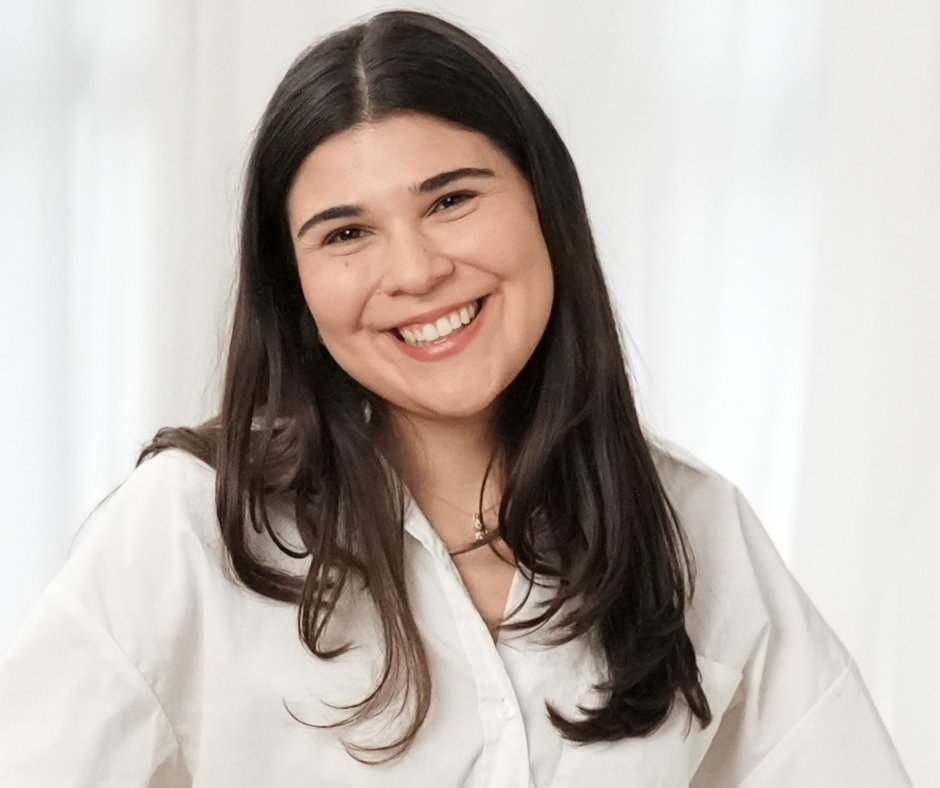
Kelsey Bross is the founder of Kel's Kitchen Table, a granola brand built on nut and seed butters, certified gluten-free oats, and real ingredients. What started as a cottage food operation and a farmers market tent has grown into a regional retail presence across New Jersey and New York City, including Pop-Up Grocer, Butterfield Market, and Westside Market. Kelsey is a Food Business Bootcamp® graduate.
Connect with Kelsey Bross and Kel’s Kitchen Table:
Visit the Kel’s Kitchen Table website
Follow Kel’s Kitchen Table on Instagram
Connect with Kelsey on LinkedIn
Stay Connected with Djenaba Johnson-Jones:
Visit Hudson Kitchen
Follow Hudson Kitchen on Instagram
Connect with Djenaba on LinkedIn
-
Djenaba Johnson-Jones (00:36)
Today I'm chatting with Kelsey Bross of Kel's Kitchen Table. Welcome, Kelsey.
Kelsey Bross (00:40)
Thank you so much for having me.
Djenaba Johnson-Jones (00:42)
Absolutely. So glad that you're here. So I want to talk first about how we met each other. So you took our food business bootcamp course. I think it was March of 25.
Kelsey Bross (00:52)
Yeah, so when I first started a food business back in 2023, I was kind of wondering how I could take it to the next level. And I actually used your food business bootcamp online pamphlet as like my Bible early on when I was learning what permits to get, what steps to take that were kind of necessary. And at that point, I was just a cottage food permit holder.
Kelsey Bross (01:22)
So I was making things out of my own kitchen. And then eventually when I went into farmers markets, which was my first stop on my CPG journey, I decided to take the business bootcamp in person. So I took that in March of 2025 and it was such a great experience. And it really gave me the tools and the foundation that I needed to take that next step and really make.
Kelsey Bross (01:50)
my brand into a shelf-ready piece.
Djenaba Johnson-Jones (01:57)
Amazing. So let's go back and talk about the farmers market for a second. So you did send some time getting a lot of customer feedback, obviously making sales at farmers markets before you moved into some retail. So let's talk a little bit about that first and tell what are your experiences at the market.
Kelsey Bross (02:11)
Yeah, so when I started this, when I started Cal's Kitchen Table Granola, I really just wanted to connect with other people and share what I loved. And the best way I could think about doing that is doing pop-ups in farmer's markets. So that is where I got my start. I live in Jersey, so I started at the Hoboken and Jersey City farmer's markets, as well as some pop-ups in Montclair and Morristown. And that really helped.
Kelsey Bross (02:39)
me gain so much perspective into my customer, who they are, what their habits are, what their families are like, what they're interested in. And it really helped me build such a clear messaging for my brand. spent exclusively a year and a half every weekend being out there, getting direct feedback from customers, making sales and getting to connect with them and also seeing what they liked and what they didn't like.
Kelsey Bross (03:09)
testing new flavors and you can get that immediate feedback when somebody tries your product in front of you it is the best because they will
Djenaba Johnson-Jones (03:19)
Hahaha
Kelsey Bross (03:20)
be honest with you and you can see people's reaction and also for example a lot of our customers wanted gluten-free oats so oats regular old-fashioned rolled oats are of course naturally
Kelsey Bross (03:35)
free of gluten, but a lot of celiacs are very sensitive to them because they are grown in the same fields as wheat and other products. So I learned from this process that a lot of people wanted certified gluten-free oats. And that is something that I made an investment in for my product to be able to reach all of my customers and their needs and their wants. And also they wanted some nut-free options. A lot of my...
Kelsey Bross (04:03)
My granola is based in nut butter. So it's based in nut butter like almond butter, cashew butter, things like that. So I made a few options that were nut free. So I used sunflower butter and people really loved having something that was super flavorful and had that nutty feel but without the nuts. So those were some great feedback that I got from customers that I wouldn't have gotten if I just went straight to retail.
Kelsey Bross (04:30)
So being able to build that customer base and listen to them really made my product better.
Djenaba Johnson-Jones (04:36)
That's really cool. So when did you decide to make the jump into retail?
Kelsey Bross (04:40)
I would say at the end of my first farmers market season, I definitely knew that I almost had a proof of concept, right? So I had sales, I had interest. So I began selling where my farmers markets were. So at local independent grocery stores or cafes, because my customers were wanting things outside of farmers market season. So that's when I went to where they shop locally.
Kelsey Bross (05:05)
and kind of pitched my product as, hey, I've been very successful in this farmers market season and customers in this area are looking for places to buy my granola. And that's how I kind of got started into retail. And that was super successful, especially starting locally in my own backyard. Having that customer base existing really helped my sales in those first few stores.
Djenaba Johnson-Jones (05:30)
Tell us about the first few stores. What types of stores did you target?
Kelsey Bross (05:33)
Yeah, so I targeted cafes and specialty retailers or independent retailers. So my first store was actually in Hoboken. It was at Urban Market and they are they were a at the time a newer local grocery store. They have about three locations in this area. One in Brooklyn, one in Long Island City, I believe. Hoboken was their first location. So I went there and we
Kelsey Bross (06:00)
you know, kind of knocked out of the park there because all of my former's market customers were just walking down the street and being able to kind of get my product in their hands and working with small independent retailers has such an upside when you're a small brand because they're not looking to charge you any sliding fees. They're not looking to force you to go on promo and they want you to be successful. And you can have
Kelsey Bross (06:25)
kind of that direct relationship with the owner or the store manager that is so important when you're growing your brand, being boots on the ground, being in there, making relationships with those store managers, category buyers, owners, and showing face. And we also really targeted local coffee shops as well. So we got into a few coffee shops in Bergen County where a lot of other people about what my product previously could go.
Kelsey Bross (06:53)
They wanted to have it with their coffee or with their breakfast in the morning. So I found that a lot of cafes did well as well because people were going there for breakfast-y stuff or in the morning and were able to grab a bag of micro-nol.
Djenaba Johnson-Jones (07:11)
That's so cool. then so you started there and then how did you kind of branch out into some larger stores?
Kelsey Bross (07:17)
Yeah,
Kelsey Bross (07:18)
so summer of 2025, I had a booth at the Summer Fancy Food Show. And that was one of the best experiences that Hudson Kitchen was able to provide me as a part of my boot camp experience as well. Getting kind of that lower rate of a booth and allowing emerging brands to kind of be in that space. I was able to for the first time really be exposed to buyers.
Kelsey Bross (07:44)
to different people in the retail and CPG business. And I got some really great feedback on my brand and also my packaging. So it was really the Summer Fancy Food Show that allowed me to branch out into larger stores in New York City and other areas. I got a lot of great feedback on how I could kind of up my branding to be retail shelf ready. So that was a large undertaking that I took later in the summer, probably from August to October.
Kelsey Bross (08:13)
I worked to kind of revamp my packaging, my branding so that I could present myself to these retailers and buyers on a larger scale. in October, we actually ended up launching in pop-up grocer in New York City. And for our first round, we came out as number one or number two in our category, depending on the day. So we did really well on our first rotation there.
Kelsey Bross (08:39)
Pop-up Grocer kind of rotates their products every quarter. So we've been able to come back now for three quarters and also get exposure to places like Butterfield Market, West Side Markets, things like that. So really just kind of branching out in my own backyard has been super successful for me on, you know, kind of going on a little larger scale regionally before a national launch or something like that. Definitely growing.
Kelsey Bross (09:05)
at my own rate and really staying local has been really great for us because it's really allowed our customers to get to know us and have multiple places to shop our products.
Djenaba Johnson-Jones (09:17)
So I'm curious as to like you mentioned the Summer Fancy Food Show and the feedback that you got from buyers. So I love to hear what changes did they recommend you make to your packaging and then what other types of changes did they recommend?
Kelsey Bross (09:30)
Yeah, so something that almost every buyer would ask would be why granola? And at first, I kind of did not have a great answer. knowing
Djenaba Johnson-Jones (09:41)
You
Kelsey Bross (09:42)
what questions they're going to ask in terms of what differentiates your product and why did you come into this space? And for me, I really discovered that our nut and seed butter base really differentiates us.
Kelsey Bross (09:57)
gives us five grams of natural protein per serving higher than the average granola. We use maple syrup as our sweetener and we are a standalone snack versus a topping on a yogurt. And we have creative flavors that really tip us over the edge. And also I got into granola because it was something that I eat every day that I wasn't seeing fulfilled in the grocery store. I was finding these super high in sugar and processed.
Kelsey Bross (10:25)
brands that were available to me that were just not making the cut. So that's why I started making it for myself, you know, and sharing that with others has been so great. And it's really, you know, changed my life and hopefully others as well,
Djenaba Johnson-Jones (10:42)
you
Kelsey Bross (10:42)
to help them find a product that fits into their diet and also just with whole great foods. So
Kelsey Bross (10:50)
That was definitely something that I really learned from the Fancy Food Show was to kind of streamline messaging and know my purpose. In terms of packaging, I had designed my previous packages on Canva on my computer, which is great. It looked great for farmers markets, but it was singular faceted. It didn't pop out on shelves. And I got a lot of great feedback on my colors, my fonts, and different ways that I could kind of highlight the messaging that I wanted.
Kelsey Bross (11:20)
versus kind of just the homemade feel that our packaging had. So we really brought it up to the next level and were able to highlight features that drew customers in such as that we are gluten-free and we are not in seed butter base and we use coconut oil instead of, you know, a seed oil. So finding out for buyers what's important to them and what stands out on their shelves in terms of colorings and fonts as well.
Kelsey Bross (11:49)
was super important. So taking all of that into account, we kind of upped our packaging and is now, you can see it on the shelves and when it's
Djenaba Johnson-Jones (11:59)
You
Kelsey Bross (11:59)
out there, I'm proud of what it looks like.
Djenaba Johnson-Jones (12:03)
what was the difference between talking to a retail buyer and talking to the customer at the farmer's market?
Kelsey Bross (12:08)
When you're talking to a customer face to face, you can really connect with them. And they can tell you straight from their mouth what they look for in a granola or what they buy. It's a very personal conversation. And you're able to represent your product and connect with them and tell them your back story. And they get to learn about you. You get to learn about them. And it's a very personal interaction.
Kelsey Bross (12:32)
with a buyer, they are trying to build a shelf for their category or their store that's going to do well with their customers. And they're representing an entire store and an entire set. So speaking to them, it's more about pricing and ingredients and packaging and labeling. So they ask a lot of questions that have to do with what's going to do well in their store.
Kelsey Bross (12:59)
You know, they are that buffer for you, right? So you're not standing in the aisle selling your granola and being like hey look at me. This is my brand and you can't be there and standing in front of your bag every single time. So you really have to show the buyer what you're going to do to move units in their store and drive velocity versus with the customer. That's a very personal conversation and that sale is much different than someone. You know a buyer who's going to buy.
Kelsey Bross (13:29)
hundreds of bags from you and take a chance to put in your store, you know, versus a customer who's going to come back every week and buy a bag or two. So totally different conversation when you're speaking to a buyer and definitely want to have your messaging, your numbers down versus with a customer at a farmer's market is definitely more of, you know, personal just for them conversation one-on-one. So I'd say that's the biggest difference.
Djenaba Johnson-Jones (13:58)
We were talking a while ago and you mentioned having some opportunities to get into some larger stores. Is that something you could share about why
Kelsey Bross (14:05)
Yay.
Djenaba Johnson-Jones (14:05)
you would or would not want to do that at this time?
Kelsey Bross (14:08)
Yeah, so
Kelsey Bross (14:10)
it's really great building relationships with stores like Whole Foods and Sprouts and pitching to them or being in a room with their buyers and creating that relationship. And it's something that I know for myself and a lot of other founders is their end goal to end up in a large chain like Whole Foods or Sprouts. And those conversations are super exciting and they're really great to have early on.
Kelsey Bross (14:35)
But it also puts into perspective just how expensive and time consuming it is to be in a shelf on a national level. And it takes a lot to get there. And it's definitely a conversation and a relationship that is built over years. And it definitely depends on your situation. For me, I'm currently self-funded. So I do not have the...
Kelsey Bross (15:03)
financial backing to be able to produce, you know, thousands, hundreds of thousands of units, get them on shelves and then, you know, pay for to be on shelves during promos or slotting fees, things like that. There are so many fees that come with getting on a national shelf that I was just not aware of until I was in that situation. And for me, the decision came down to it is way
Kelsey Bross (15:31)
easier to wait your turn and be patient and grow nationally and gain brand awareness slowly and naturally versus kind of fronting that money and then have the risk of getting discontinued because getting back on the shelf is way easier. mean way harder getting back on the shelf is way harder after being discontinued versus
Kelsey Bross (15:59)
kind of just waiting for the right time for you and your brand to invest in going to a national chain. And while that's really hard to admit to yourself as a founder, I just wasn't ready in terms of brand awareness and financial stability to be able to go national. So I've really found joy and success where I am locally.
Kelsey Bross (16:25)
And then hopefully we'll continue to expand regionally until we have that foundation to do a national launch,
Djenaba Johnson-Jones (16:33)
you had that awareness about yourself and didn't try to rush to do something just so you could post on LinkedIn that you did it.
Kelsey Bross (16:40)
Yeah, because it's
Kelsey Bross (16:41)
really hard because it's so exciting and you want to be able to say like my brand is on the shelf at Whole Foods. You can find me in every single store because that's such a great milestone. But if you don't have the ability to follow through, it can quickly be the downfall of you or your brand.
Djenaba Johnson-Jones (17:04)
So do you have any other pieces of advice for someone that's just starting out?
Kelsey Bross (17:08)
I would say do it scared and don't expect everything to be perfect. There is something, there is someone who said, if you wait to launch your product until it's perfect, you've launched too late. And I wholeheartedly agree with that. And I think the term launching can mean a lot of different things for different people. For me,
Kelsey Bross (17:35)
I worked farmers markets and I worked pop-ups until I officially quote unquote launched in stores. So you can do, you can move the needle in different ways, small or big, but you know, take those small steps and just learn as you go because it's way easier to learn.
Kelsey Bross (17:58)
on a small scale than it is on a large scale. So just start somewhere, start locally. Don't be afraid to get in front of customers and pitch yourself and pitch your products because that is where all of my really foundation came from for my brand is really just getting in front of people with a product that looks nothing like what's on shelves today. know, start in a plastic bag, start in a brown paper bag, you know.
Kelsey Bross (18:25)
And that will get you very far, you know, because as you take these little steps, all of sudden, you're not so little anymore. So just start, just do it, do it small, do it locally, and believe in yourself and believe in your product.
Djenaba Johnson-Jones (18:39)
Awesome, thank you. So we have a tradition at Hudson Kitchen where we ring a bell when we're celebrating something. So I'm wondering, what are you celebrating?
Kelsey Bross (18:46)
I am celebrating being at Butterfield Market in New York City and doing well. So that is what I'm celebrating today.
Djenaba Johnson-Jones (18:55)
amazing. Kelsey, thank much for being here. Tell everyone where they can find out about you and Kel's kitchen table.
Kelsey Bross (19:01)
Yeah, so thank you so much for having me. You can find us online at www.kelskitchentable.com where you can learn more about me and also order our products. And you can find us on Instagram at Kel's Kitchen Table.
Djenaba Johnson-Jones (19:16)
Thank you.
Kelsey Bross (19:17)
Awesome, thanks.